Kalispera Greece Fourni.

ISLANDS A-Z CRETE CYCLADES DODECANESE EASTERN AEGEAN
IONIAN SARONIC SPORADES MAINLAND ABOUT US

Sights on Fourni

Fourni has not much to offer concerning sights, so you can disconnect the part of your brain that are interested in history. But if you, like me, are interested in old marble quarries, you will have as much as you wants of it at the pebble beach of Petrokopio south of Kambi beach. You can go on foot to Petrokopio if you like to walk, if not, you just rent a scooter, you can go by scooter almost all the way to the quarry.


The marble quarry at Petrokopio

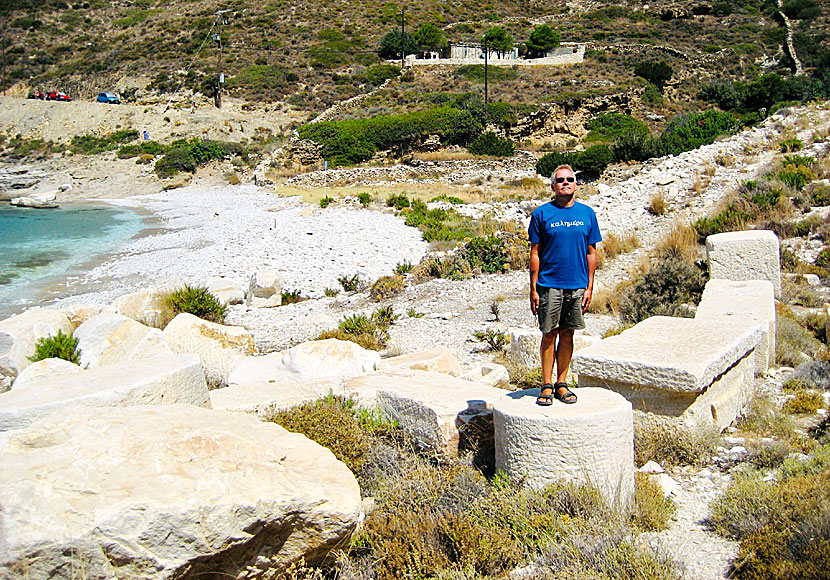
The first time I arrived at Petrokopio, I had no idea what I was looking at. I could certainly see that it was an old marble quarry, and it was impossible to miss the huge chunks of marble scattered across the slope and down on the beach. There were sections of columns, large square blocks, and a beautiful Ionic capital. And then there was something that looked to me like an altar. Or possibly a sarcophagus. I had no end of questions.


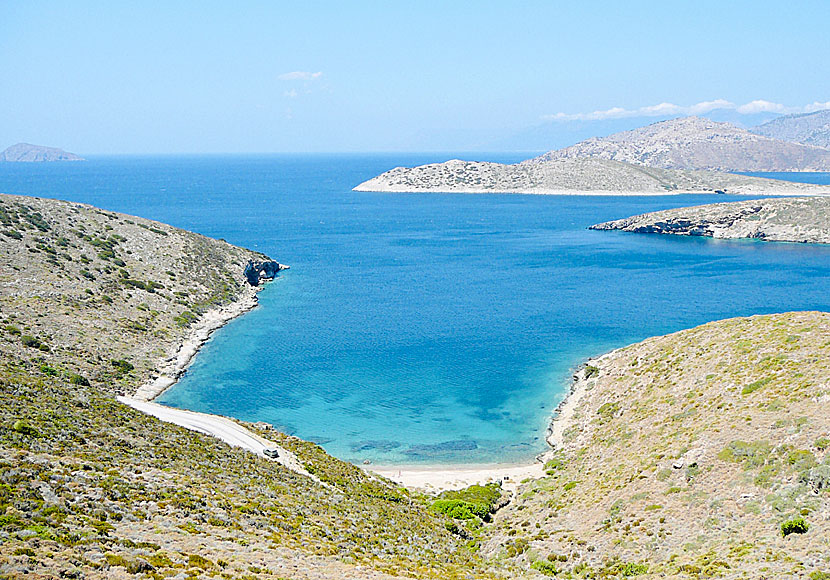
Petrokopio beach near Kambi on Fourni in Greece.

Petrokopio beach where the marble quarry is located.


When was the marble quarried? Who worked here? What were the gigantic columns intended for? Why was everything left behind? Where did the marble that actually left Fourni end up? I asked the locals, but no one knew. I searched online and found almost nothing. I even asked ChatGPT, which at the time hadn't a clue. :-) But now I know more.

And that makes Petrokopio even more fascinating. The marble quarry was used in antiquity and certainly during Roman times. The quarry is situated right by the sea, which was naturally ideal. It was far easier to get marble blocks weighing several tons down to a ship if the vessel could dock almost directly below the work site, rather than having to drag the marble across the island first.


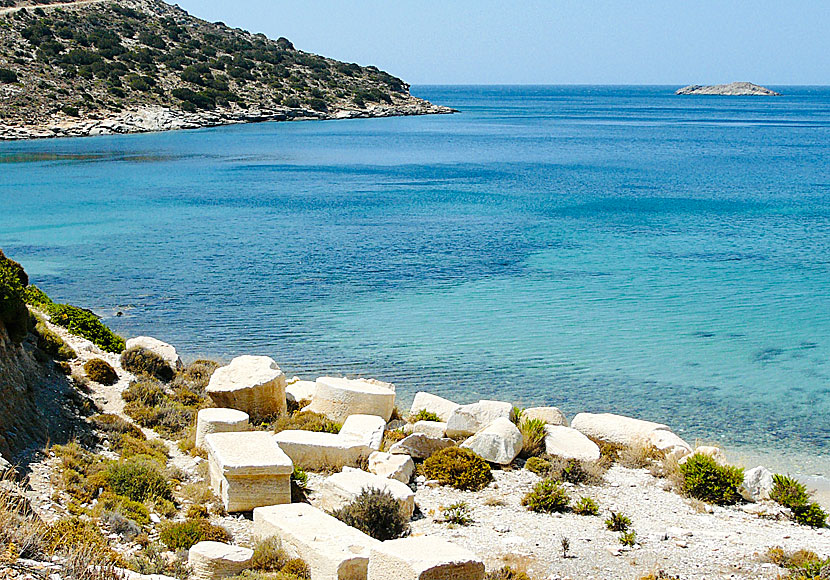
Marble stones at Petrokopio beach in Fourni.

Marble stones at Petrokopio beach.


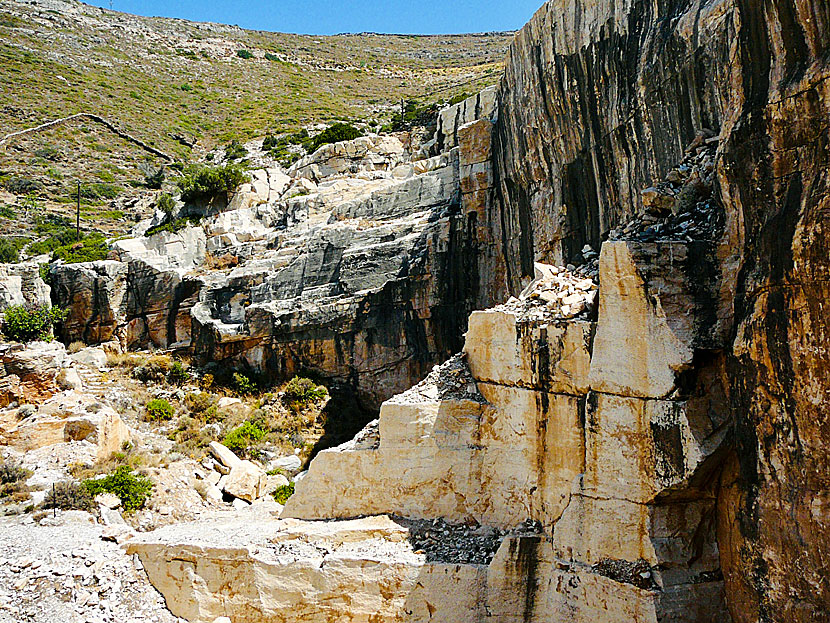
The stonemasons also carried out much of the rough work here. Excess stone was hew away before the blocks were transported down to the shore. Why ship a large amount of marble that would only be cut away later? Traces of the workers remain in the rock face. You can see marks left by the heavy tools used to quarry the marble. And everywhere, half-finished pieces lie scattered about as if the stonemasons had simply gone home for the day a couple of thousand years ago and forgotten to return.


 The ancient marble quarry on Petrokopio beach near Kambi on Fourni in Greece.

The ancient marble quarry at Petrokopio beach.


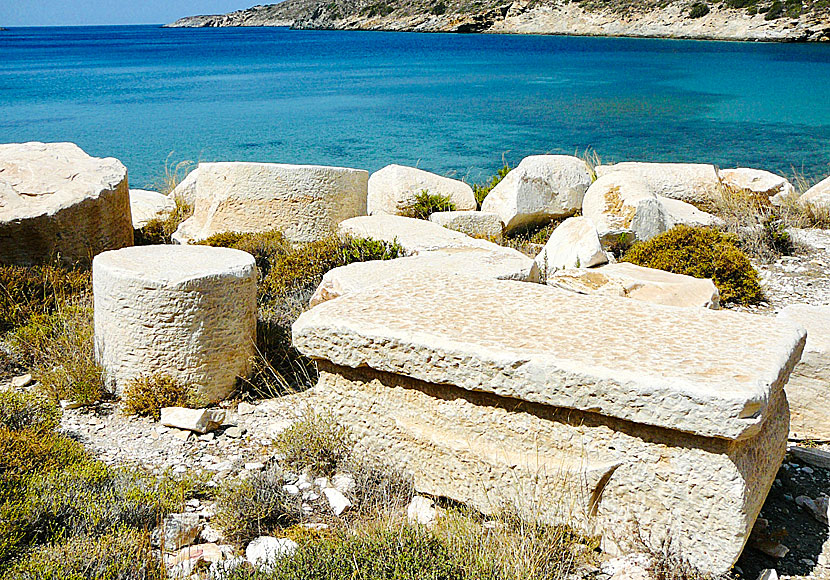
Among the finds are columns nearly two meters in diameter, large building blocks, and an Archaic Ionic capital. And that object I thought looked like a sarcophagus? It is a sarcophagus. An unfinished one, at that. It measures a full 3.36 meters in length, 1.30 meters in width, and one meter in height. There is even a raised area on the side where an inscription was intended to be carved. So, at least I got an answer to one of my questions there.


Columns, Ionic capitals, altars and sarcophagi in the ancient marble quarry at Fourni in Greece.

Parts of columns and a sarcophagus.


Today, Petrokopio feels like a rather remote spot on a small, quiet Greek island. In ancient times, however, the place was part of a completely different world. Here, people quarried enormous blocks of marble that would be loaded onto ships and sailed across the Aegean destined, perhaps, to become parts of some of the era’s greatest and most impressive buildings. It fires the imagination. How many people worked here? What did it sound like when picks struck the marble all day long? How did they get the largest blocks down to the shore? What did the ships that transported them look like? And how nervous was the captain when he set out onto the Aegean with tons of marble on board?

I find myself thinking particularly about that last question. I’ve traveled by boat between Fourni, Ikaria, and Samos when the Meltemi wind was in a foul mood. I wouldn’t have wanted to make that same trip with a couple of gigantic marble columns as carry-on luggage. :-) Even more remarkable is the fact that several fully and partially carved pieces remain down by the sea. Researchers who have studied Petrokopio believe they were brought there to be shipped out but the shipment never happened.

Why? No one knows. Perhaps the construction project they were intended for was halted. Perhaps the blocks were damaged. Perhaps something else entirely happened. In any case, two thousand years later, they still lie there exactly where the ancient stonemasons left them. There are even worked marble blocks underwater just off the quarry. Sea levels were lower when the quarry was in use, so part of the ancient worksite now lies on the seabed. I find that fact truly mind-boggling.


Is Kalispera  Janne an ancient statue on the island of Fourni? The answer is yes.

When asked who is the statue by the beach, I know the answer. :-)


It is one thing to wander among ancient ruins where archaeologists have re-erected columns, put up signs, and explained what you are looking at. Petrokopio is the exact opposite. Here, history still lies scattered across the beach. Unfinished. Disordered. Almost exactly as it was left. There are no ticket booths, no souvenir shops, and hardly any explanations. Just the marble, the sea, and all these curious remains.

Earlier, I wrote that Fourni doesn’t have much to offer in terms of sights. I might have to take that back. Because if you have even the slightest interest in history, I think the marble quarry at Petrokopio is one of the coolest places on Fourni perhaps precisely because so little has been done to the site. You have to use your own imagination. And although I’ve since found answers to several of my old questions, the one I’d most like answered remains: What happened on that final day when the stonemasons put down their tools and never returned? I will likely never know. But I will certainly be thinking about it the next time I’m at Petrokopio.


It is about 3.5 kilometers from the harbor promenade in Fourni village to Petrokopio

It is about 3.5 kilometers from the harbor promenade in Fourni village to Petrokopio.


It is about 3.5 kilometers from the harbor promenade in Fourni village to Petrokopio. Allow for a walk of roughly 50 minutes. The road climbs over the hills before winding down toward the beach, and the views along the way are spectacular at times. The return journey can, of course, feel a bit longer, as you first have to make the climb back up from Petrokopio. We rode a scooter there because walking in the heat felt like too much of an effort.


The Roman sarcophagus in Fourni village

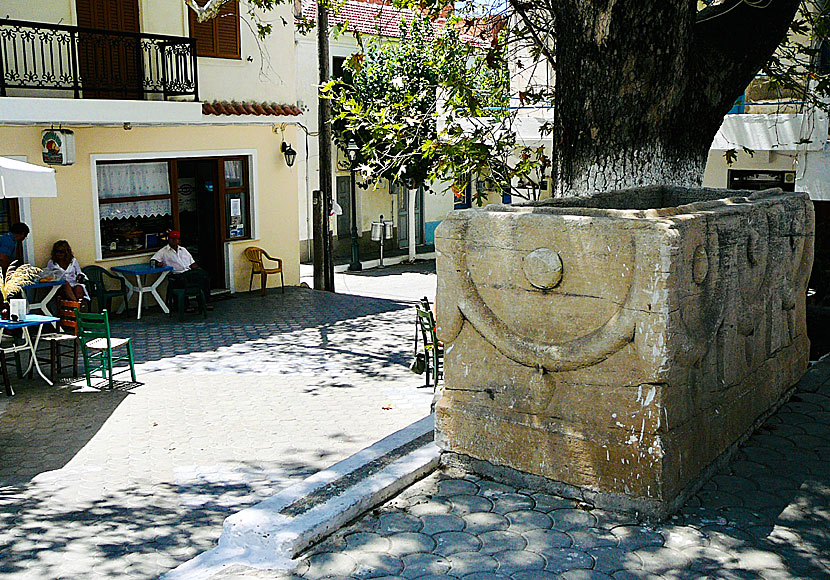
In the middle of the village of Fourni, right next to a cafe and beneath the large plane tree, stands something very easy to walk past without giving it much thought: a Roman sarcophagus. The first time I saw it, I mostly just thought it was yet another old stone chest that had ended up in the square for some reason. In Greece, you almost get used to the ancient world popping up just about everywhere. But this sarcophagus has a story and it is far more personal than I could have imagined.

The sarcophagus belonged to a young man named Epameinon. An inscription still remains on the side, stating that he was the son of Tilon and Philte and that he died at the age of just twenty-five. There is something about that particular age that makes the stone suddenly feel less like an archaeological artifact and more like a person’s grave. Epameinon lived here about 1,800 years ago. Perhaps he walked along the same coast we do today. He saw the same mountains, the same sea, and likely the same fierce Meltemi wind when it decided to blow with full force. Then he died, far too young.


The Roman sarcophagus in Fourni island.

The Roman sarcophagus in Fourni village.


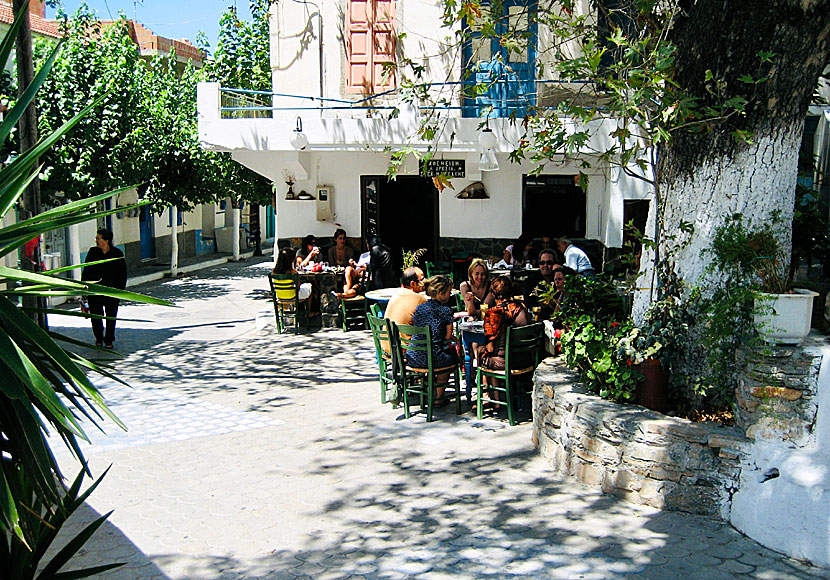
The sarcophagus was discovered in 1927, when a landowner was digging on a plot south of Agios Nikolaos to cultivate the land. Beneath the surface lay the tomb of Epameinon. The lid was never found, and the sarcophagus was eventually moved to the spot where it stands today. What is remarkable is how naturally it fits in. On one side, people sit drinking coffee. Someone orders a frappé. Someone else discusses ferry schedules. Children run past. The plane tree provides shade. And in the midst of it all stands Epameinon’s sarcophagus.


Next to the Roman sarcophagus in the square in Fourni village there is a cosy cafe.

The cosy cafe on the square in Fourni village. The sarcophagus rests behind the tree on the right.
 

There is also an intriguing connection to the marble quarry at Petrokopio. The sarcophagus is made of local marble, and a large, unfinished sarcophagus still remains at Petrokopio among the ancient marble blocks. Whether Epameinon’s sarcophagus was actually carved there is not known for certain. Perhaps a stonemason stood down at Petrokopio nearly two thousand years ago, working on this very stone. Perhaps it was transported from there up to the Roman burial ground near the present-day village of Fourni. No one knows. But the next time you sit at the café next to the sarcophagus, you can at least say hello to Epameinon. He has been there considerably longer than both the café and the rest of us. And I suspect he has heard more stories from Fourni than anyone else.


The tiny church in Agios Ioannis is also worth seeing.

The tiny church in Agios Ioannis is also worth seeing.


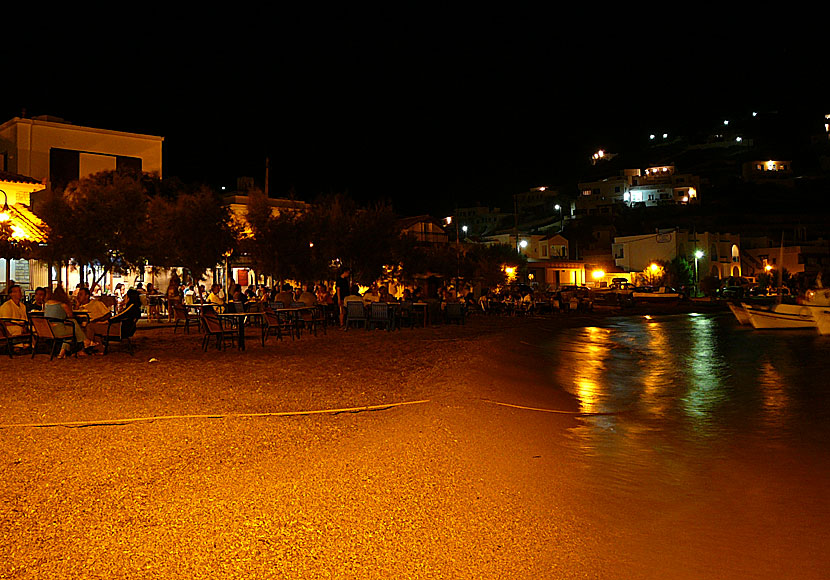
Tavernas, bars, and restaurants on Fourni.

Perhaps the most important attraction i is sitting at a taverna down by the harbor and enjoying the evening.


READ MORE ABOUT FOURNI

About Fourni Getting here Getting around Villages Beaches Sights Hotels


HOME

ABOUT US

SEARCH

BOOK HOTEL

GREEK ISLANDS

SWEDISH

© 2007-2026 | Janne Eklund | Kalispera and Kalimera.