| |
| ISLANDS A-Z | CRETE | CYCLADES | DODECANESE | EASTERN AEGEAN |
| IONIAN | SARONIC | SPORADES | MAINLAND | ABOUT US |
Pylos in southwestern Peloponnese |
 |
|
Pylos is located in the Messinian region of southwestern Peloponnese.
The capital of Messinia is Kalamata, which has a population of
about 72,000, compared to Pylos, which has a population of about 2,220.
The village is located in the very beautiful Navarino Bay, which played
an important role in the Greek War of Independence during The Battle
of Navarino. Standing on the bay of Pylos today, it is hard to imagine
that these calm waters were once the site of one of Europe's most decisive
naval battles.
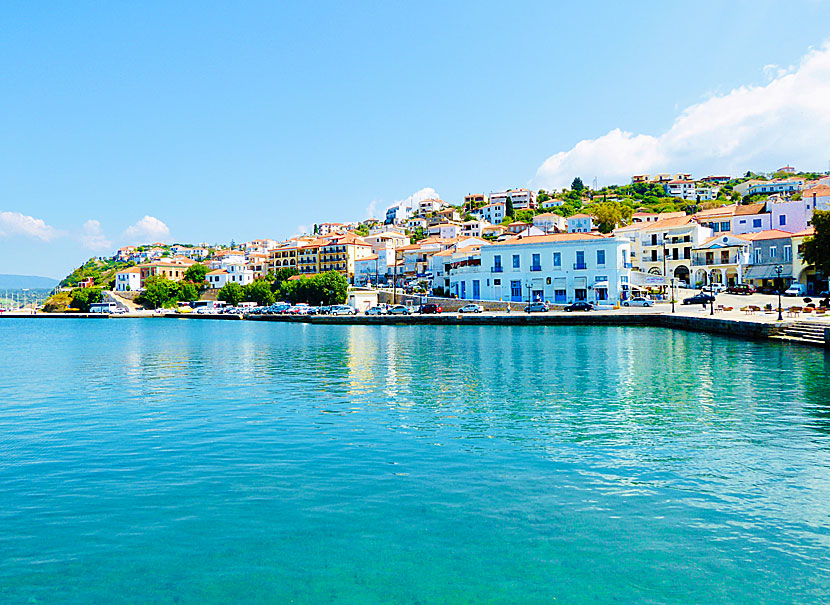
The very delightful village of Pylos in the southwestern Peloponnese.
Pylos has ancient origins and is already mentioned in the Odyssey, which is usually attributed to Homer. The first three verses are about when Telemachus begins his search for his father Odysseus, who is in Troy and fighting. Telemachus begins by traveling to Pylos where he meets Nestor, who was then king of Pylos. But even King Nestor did not know where Odysseus was staying. So if you have read the Odyssey, you have already become acquainted with Pylos.
Pylos is located in the Bay of Navarino where the Battle of Navarino was fought on October 20, 1827.
But it is not because of Pylos' past that people travel here, although of course there are some who do. Most people who come here do so for completely different reasons. First of all, Pylos is an adorable beautiful village with many good tavernas, restaurants, cafes and bars. Secondly, Pylos is a very good base for exploring the southwestern Peloponnese. It is close to fine sandy beaches, interesting sights and relatively unexploited tourist resorts. At least if you compare it to many tourist resorts in the Greek archipelago. In addition, Pylos is perfect for those who play golf. A few kilometers north of the village is Costa Navarino, which is considered to be Greece's finest golf course.
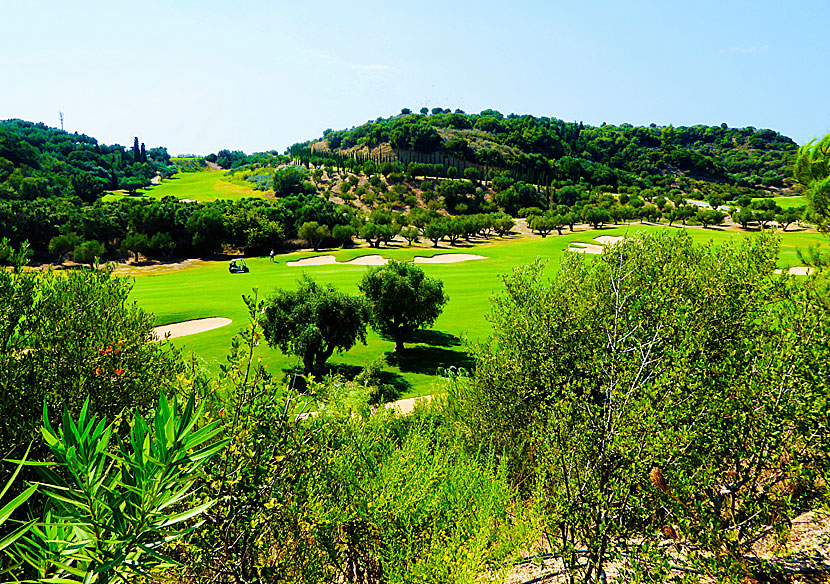
One of the golf courses in Costa Navarino, located just north of Pylos.
Pylos was built amphitheatrically around the harbor, providing both protection from the wind and a view of the Bay of Navarino. This was a deliberate urban planning approach that differed from older, more haphazardly built villages. The Three Admirals Square was placed centrally and openly, close to the harbor, and was intended to become the city's social and administrative center, which it did. Unlike the winding alleys found in many Greek villages, Pylos was given a regular street grid that radiated from the square. Planting trees to shade the square was also part of the idea of creating a European urban environment with public life. Read more about the Pylos square and architecture below. |
|
Pylos was my first introduction to the Peloponnese. This is where
my love for this part of Greece began. And it couldn't have started better.
I flew with Aegean Airlines from Stockholm Arlanda to Kalamata, from where
I took a taxi to Pylos. I had booked a room at the Hotel Anezina that
I had found online. It cost more than I was used to, but it was worth
it, because it was the best place I ever stayed in Greece, and still
is.
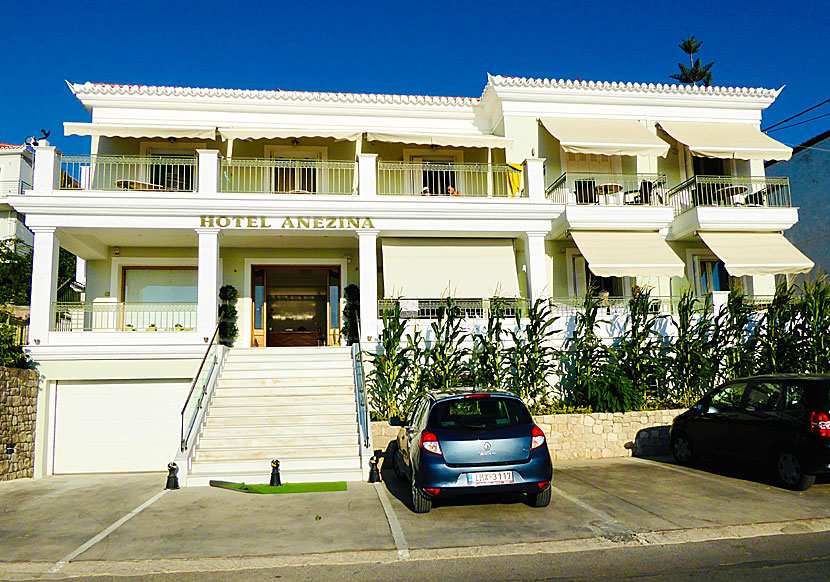
Hotel Anezina in Pylos.
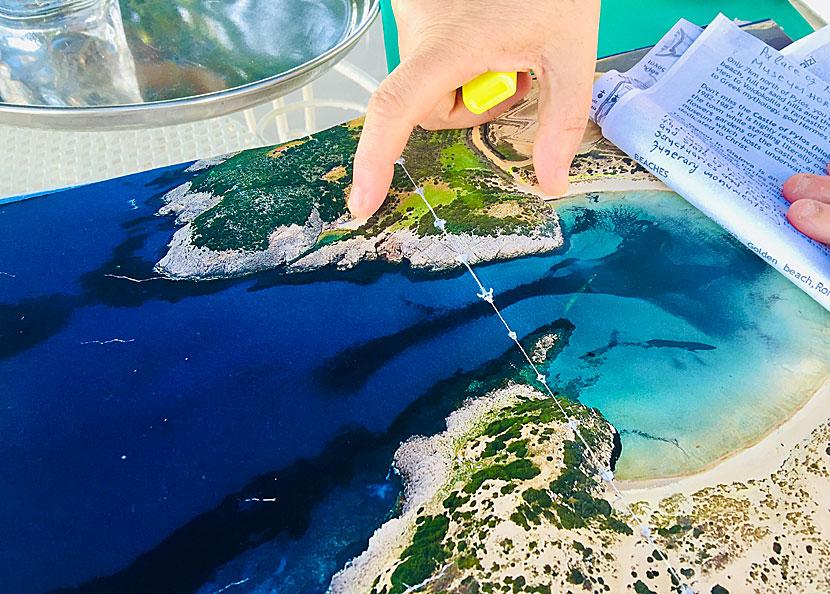
After I had seen my room and dropped off my luggage, Anezina invited me to an hour of instruction about Pylos and the surrounding area. Over a cup of coffee, she told me about the southwestern Peloponnese, and showed me pictures from a thick book. Even though I was well-read, there was a lot I didn't know.
Anezina teaches me for an hour about Pylos and the surrounding area.
When Anezina finished her talk about Pylos, I went down to the village itself, which I had heard so much about, and which I was really looking forward to discovering. When I got down to the harbor, I exclaimed in one breath: oh so beautiful! I love ports, and Pylos harbor was one of the most beautiful I had seen. But what I was most looking forward to seeing was the square, which all the guidebooks I had read about Pylos had praised. And they were right! Pylos square beat all the other squares I had seen in Greece.
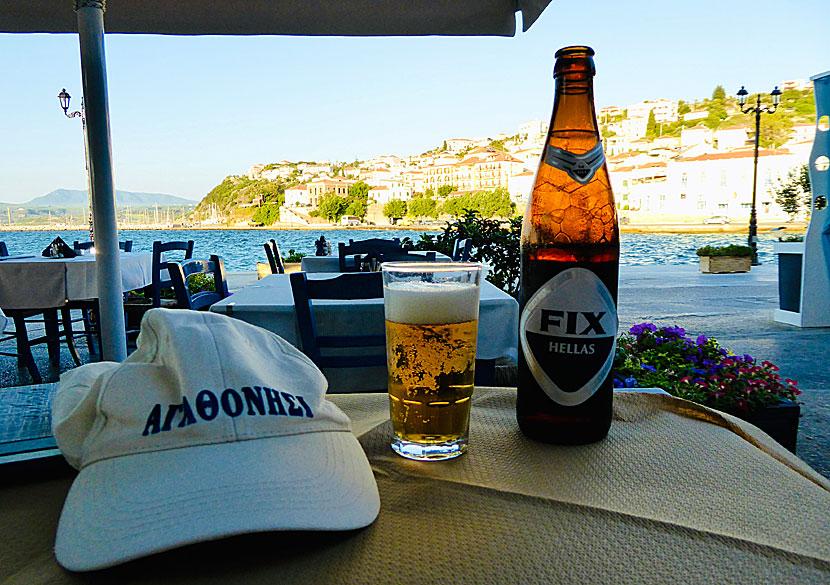
I sat down at a taverna and ordered a cold FIX, and thought: this is starting off well.
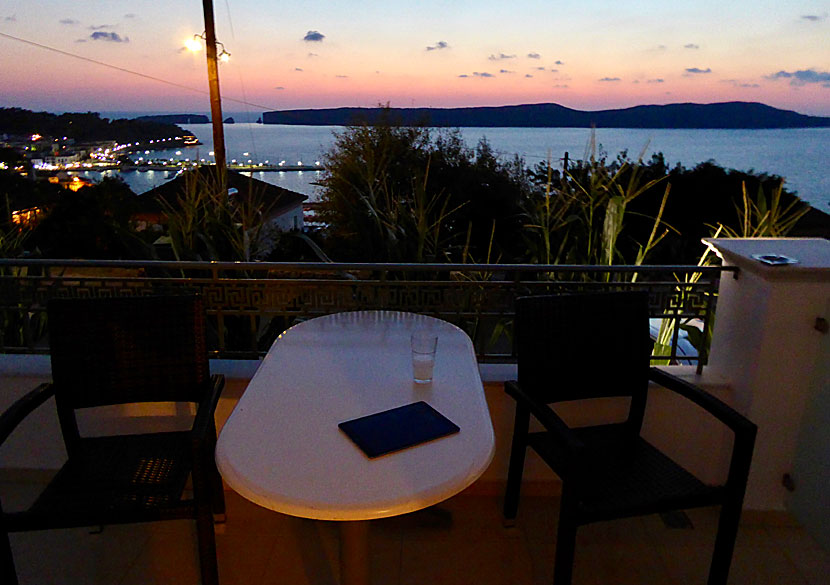
Pylos was so welcoming and nice that I felt like I had to sit down and try to take it all in, so I sat down at a taverna and ordered a cold FIX, and thought: this is starting well. When I later got back to the room, after a very good dinner, I sat on the balcony and drank a glass of ouzo, and thought: this is starting really, really well!
A glass of ouzo on my balcony overlooking the harbor of Pylos.
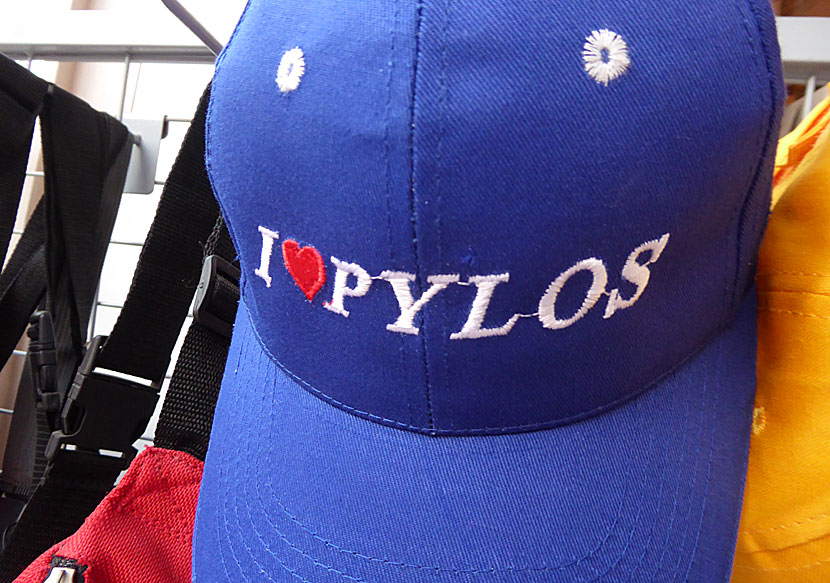
On my last day in Pylos I bought this cap. It says a lot about what I thought of Pylos. |
TRAVEL TO PYLOSThe easiest way is to fly to Kalamata, which is 55 kilometers east of Pylos. The airport in Kalamata is located about 10 kilometers west of the center of Kalamata. The airport is small but has everything you need. There are simple restaurants in the departure hall and in the arrival hall, there is a small duty-free and it is possible to rent a car.
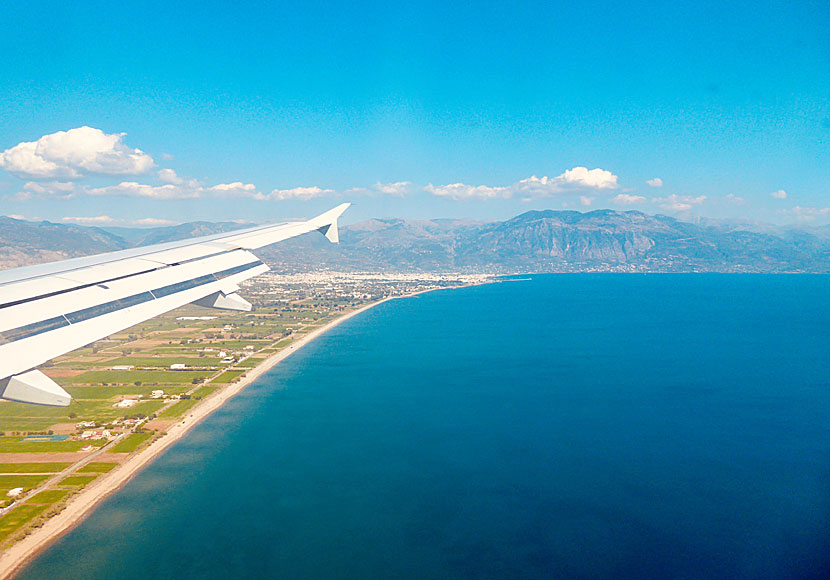
The approach to the airport in Kalamata.
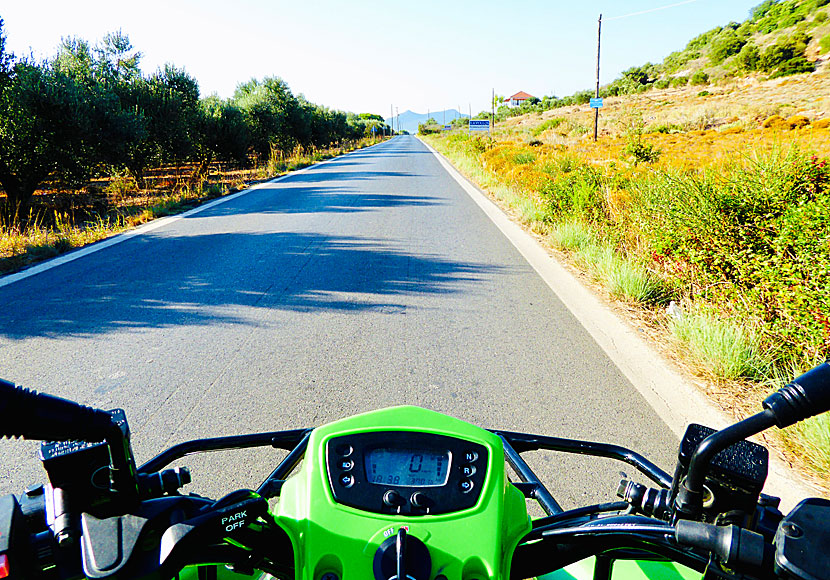
You can also fly to Athens and take a bus, or rent a car at Athens Airport and drive, to Pylos. It is approximately 280 kilometers between Athens Airport and Pylos and the drive takes approximately 3 ½ hours, depending on traffic. TRAVEL AROUND PYLOS AND SURROUNDING AREAIf you are just going to stay in Pylos, you will get around on foot. But I assume that you are not traveling here just to walk around Pylos. You cannot rent a bicycle or scooter in Pylos, but you can rent a quad bike. However, a car is by far the best option. When I was in Pylos the first time, I rented a quad bike, and I was surprised by how far I could drive. The roads are very good and the distances are quite short, unless you are going to Koroni, for example.
The roads in the area are very good and the distances are fairly short.
If you prefer to drive, there are car rental companies in Pylos. If you fly to Kalamata, you can book a car in advance and pick it up at the airport when you land. Very convenient. Buses and taxis are also available. The bus and taxi journey between Pylos and Kalamata airport takes about 1 hour.
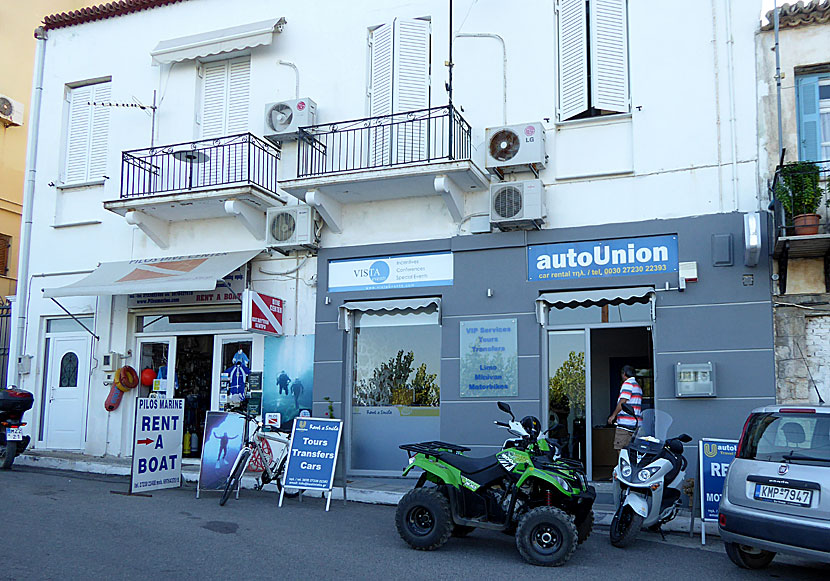
Boat rental, car and quad rental in central Pylos.
Local travel agencies in Pylos offer a variety of interesting excursions by bus. So if you want to see even more of the Peloponnese, you have every opportunity to do so while staying in Pylos. Examples of day trips include: Ancient Olympia, Ancient Messini, Polylimnio Waterfalls, Koroni, Methoni, Gialova, Kalamata, Kardamili, Diros cave and Voidokilia beach.
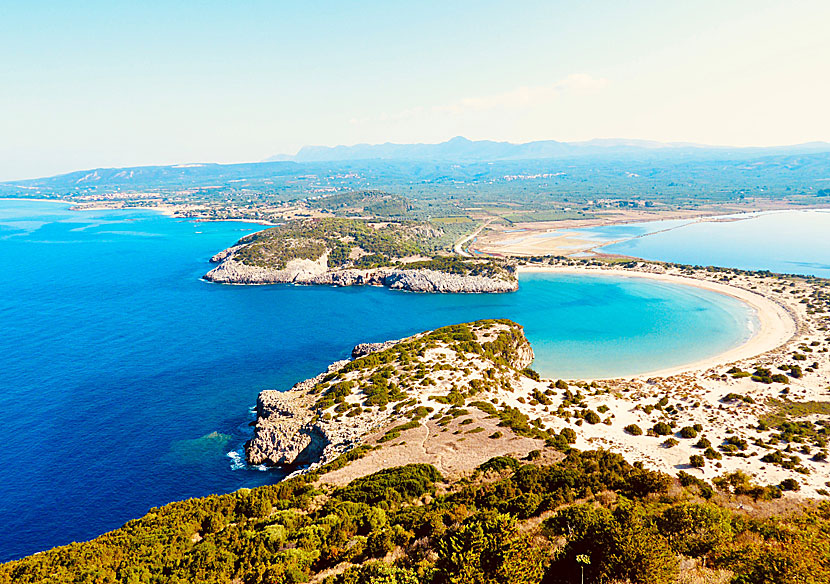
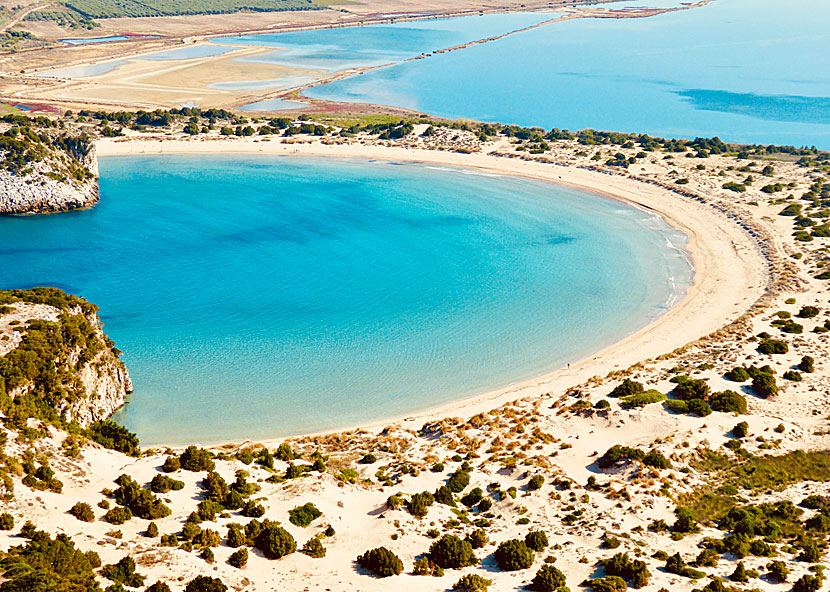
Don't miss a trip to Voidokilia beach, which I think is the most beautiful beach in Greece.
Read about amazing Voidokilia beach here »
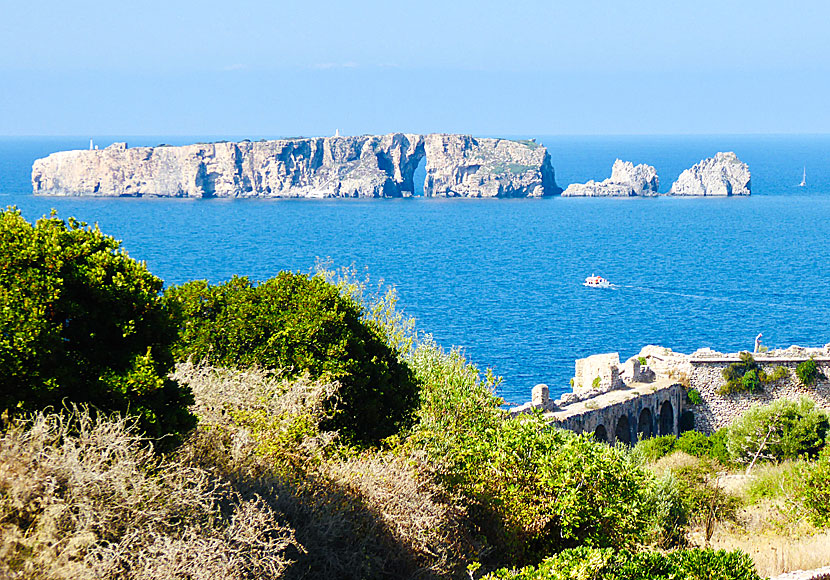
If you like boating, you can join a boat trip in the Bay of Navarino, or rent your own boat and explore on your own. The boat trips include the historically interesting islands of Fanari and Sfaktiria, which were of great importance during the Battle of Navarino in 1827. On the islands there is the possibility of visiting several memorial monuments: the French monument, the Russian monument, the Greek monument, the British monument and the Santa Rosa monument.
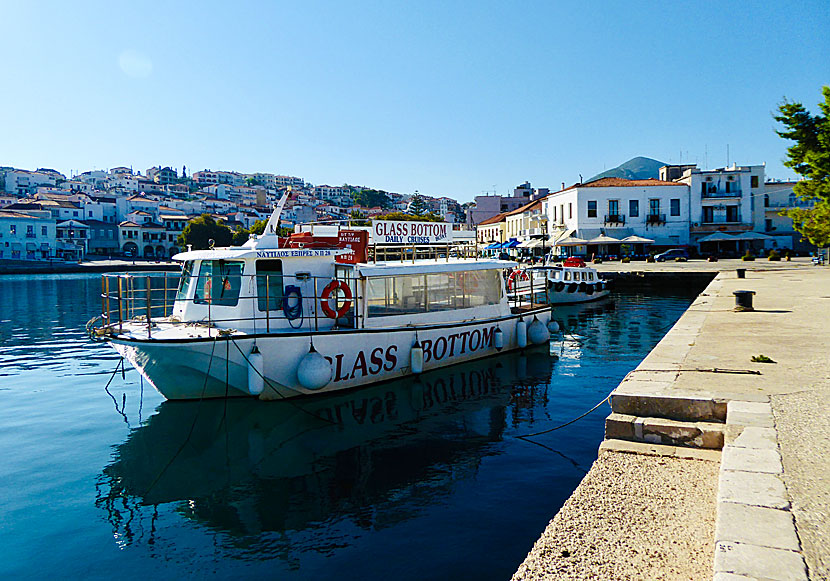
Excursion boats in Pylos harbor.
|
|
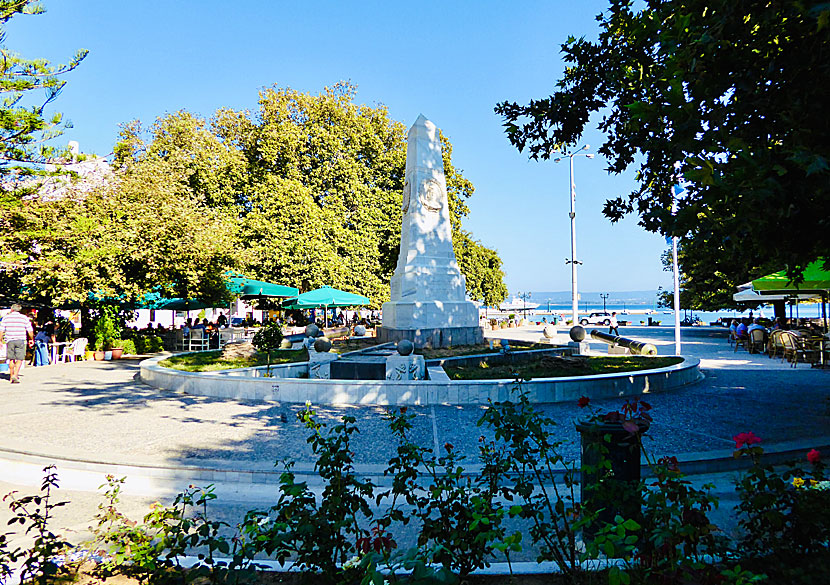
The square I mentioned above is called Three Admirals Square and is dedicated to the three admirals from the allied fleets who participated in the Battle of Navarino in 1827. Pylos was at that time a small village next to the large fortress of Niokastro, which you can read about further down. The Pylos of today began to be built by French engineers, under the leadership of the French general Maison, as late as 1828. So by Greek standards Pylos is a very young city.
The monument to the three admirals of the Allied fleets who participated in the Battle of Navarino.
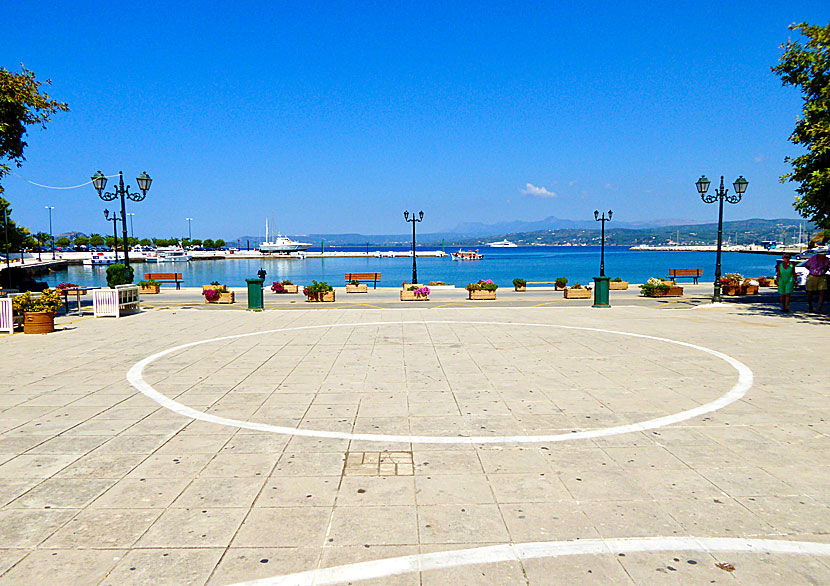
The square is the heart and lungs of Pylos and it dominates the village in a way I have never experienced anywhere else in Greece. From the aorta of the square, some arteries emanate, which via smaller veins lead upwards into the amphitheatrically built village. It is a bit of an exaggeration to say that the square IS Pylos. Where the square ends, the nice harbor promenade begins, which in one direction ends at two smaller beaches (which you can read about further down) and in the other direction Pylos Marina. For me, who likes both squares and harbors, this is something of the ultimate combination. I could go to Pylos just to sit in the square and philosophize about life, or to simply drink a cold beer in the harbor.
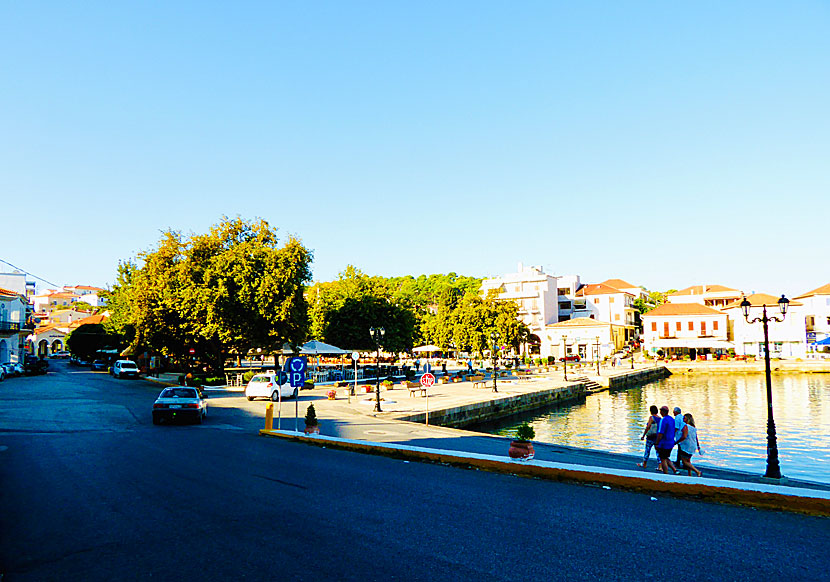
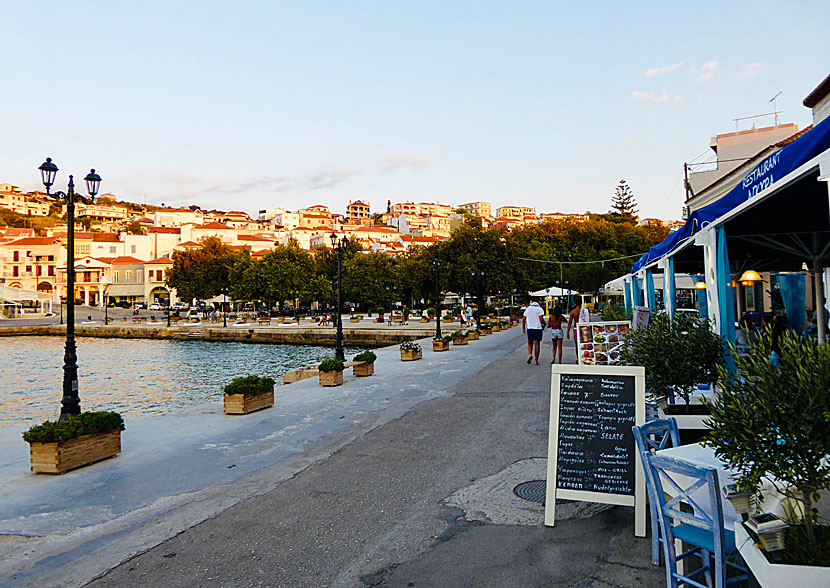
Where Three Admirals Square ends, the beautiful harbor promenade begins.
Three Admirals Square seen from another angle.
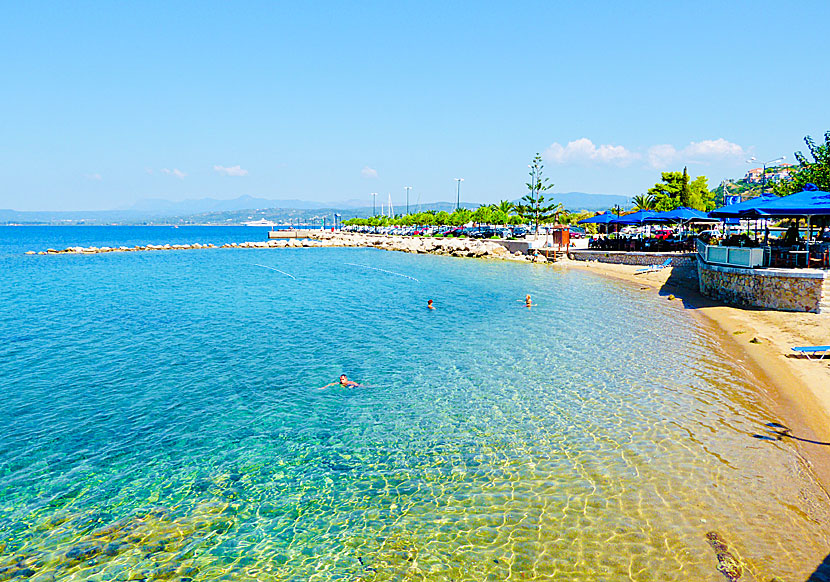
One of the beaches to the right of the harbor promenade.
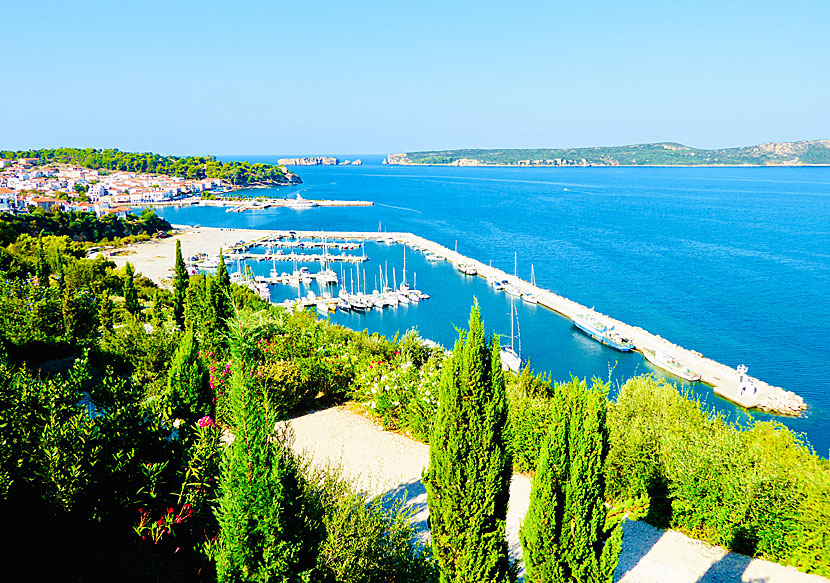
Pylos Marina is located to the left of the harbor promenade. |
|
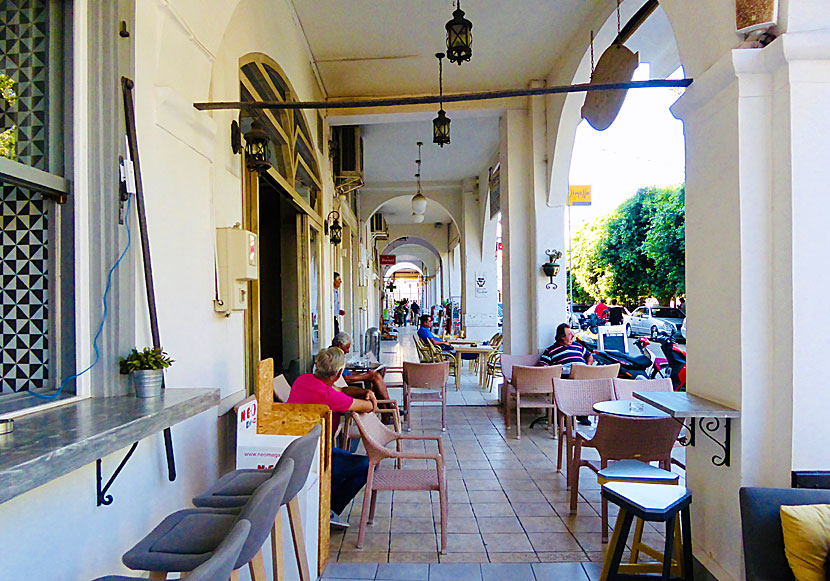
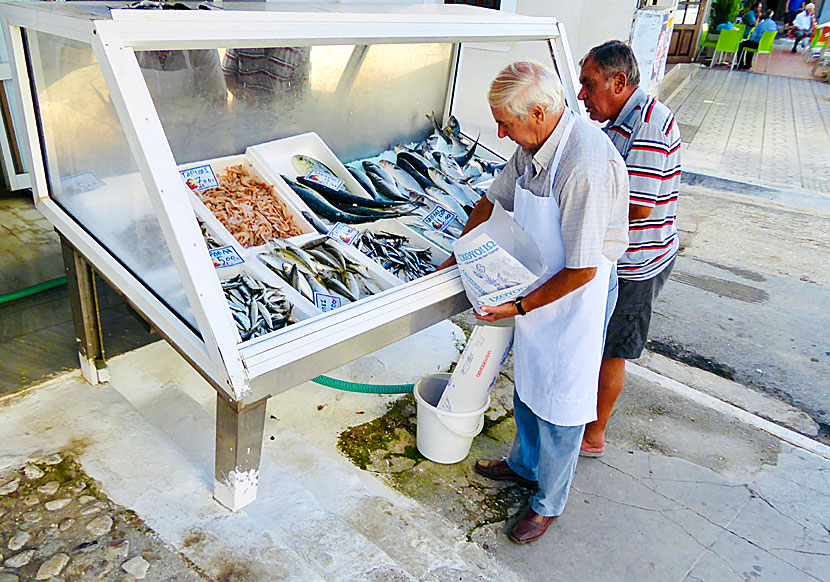
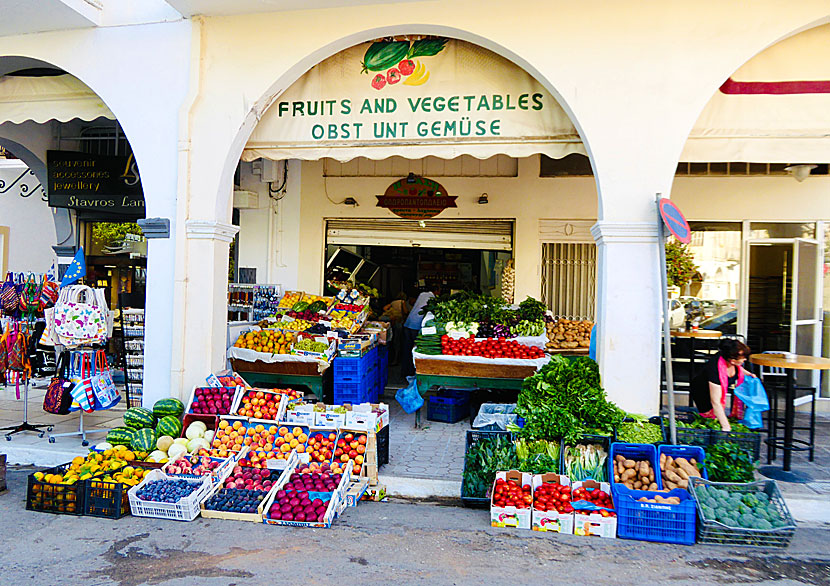
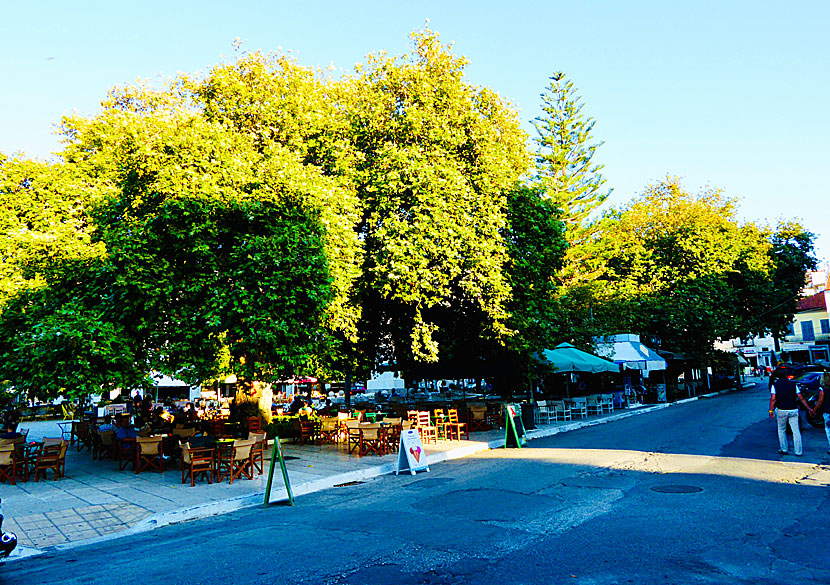
The square is like a village within a village and if there is anywhere you can experience everyday Greek life, this is it. Around the square there are restaurants, taverns, cafes, bars, gyros places, bakery, fruit and vegetable market, fish shop, pharmacy, bookstore, supermarket, and a lot of other things that belong to a lively square.
There are many cafes around the square.
Fish market at the square.
Fruit and vegetable market at the square.
One of the tavernas located at the square.
Restaurants and tavernas at the square.
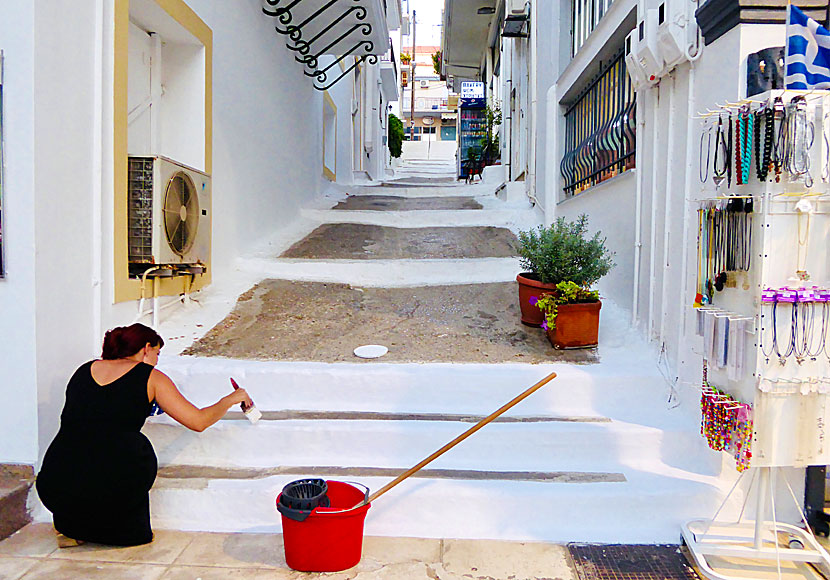
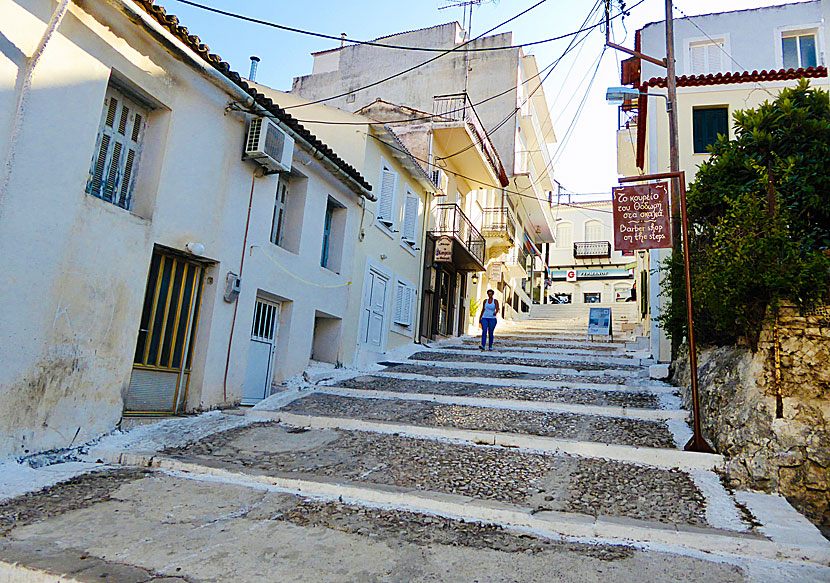
One of the alleys leading from the square to upper Pylos.
One of the steep slopes leading up to upper Pylos. |
|
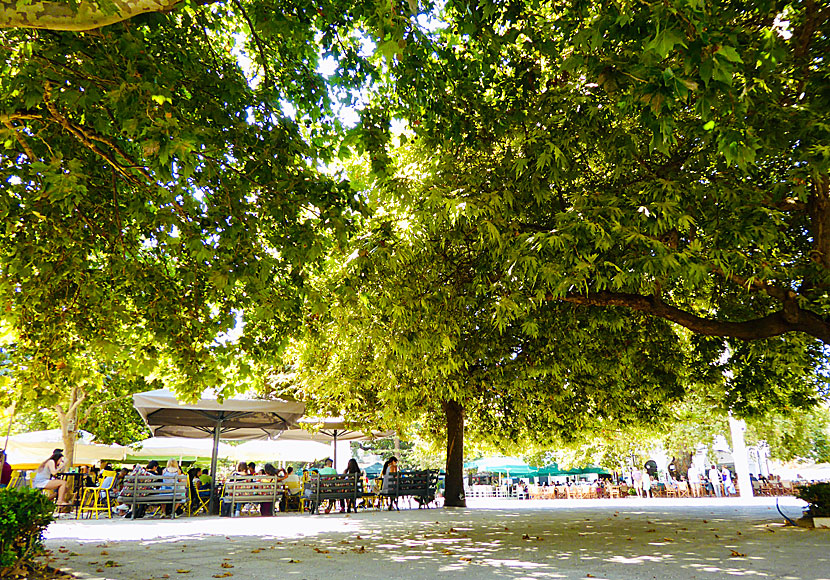
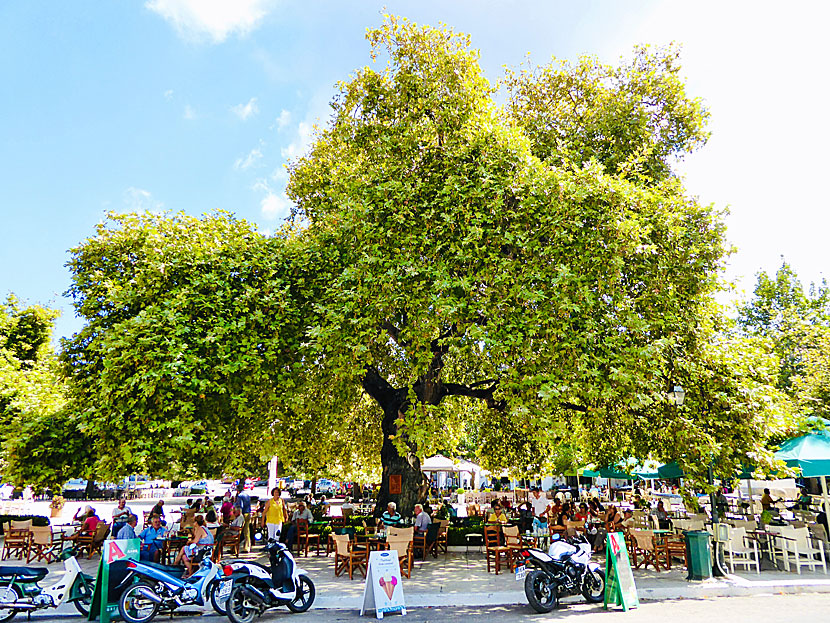
If the square rules over Pylos, then a group of magnificent plane trees dominate the square. I don't know how many plane trees grow in the square, but I know that one of the largest was planted by Iraklis Tsiklitiras, who was mayor of Pylos between 1879 and 1895. He was the father of the Olympic medalist Kostas Tsiklitiras, who is world famous throughout Greece. Read more about Kostas Tsiklitiras below.
Some of the plane trees in the square that provide shade for the cafes.
The plane tree planted by Iraklis Tsiklitiras who was mayor of Pylos between 1879 and 1895.
If the square rules over Pylos, then magnificent plane trees dominate the square.
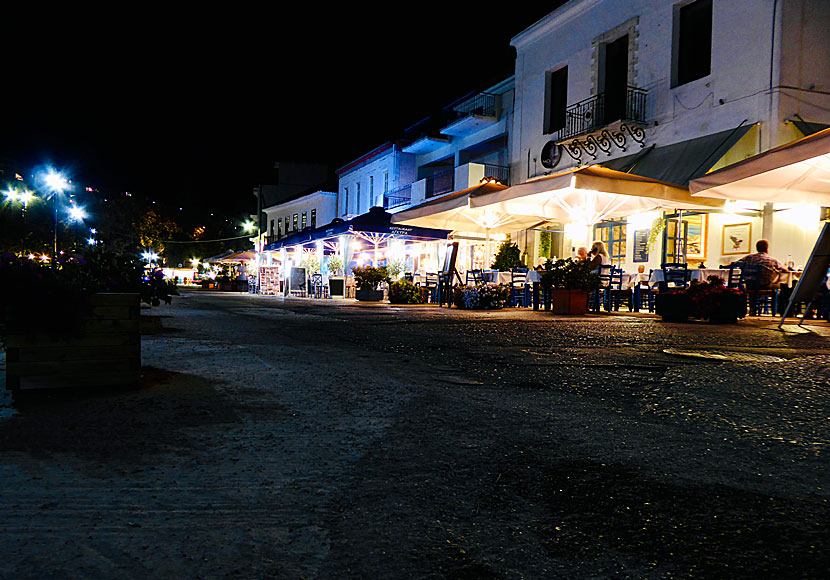
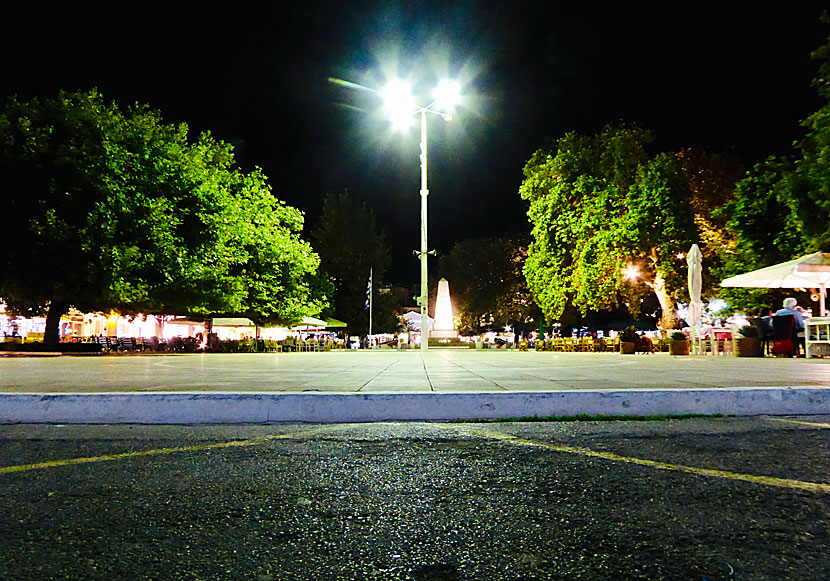
Three Admirals Square in the evening. |
|
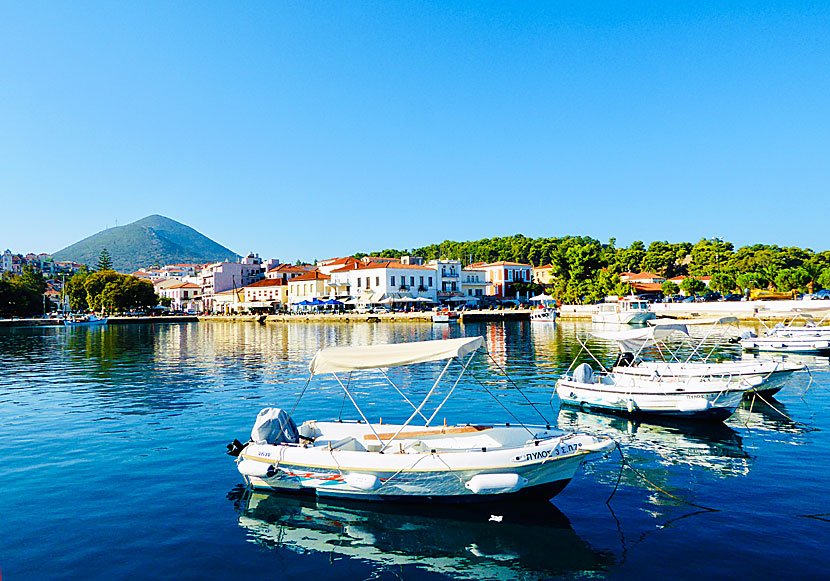
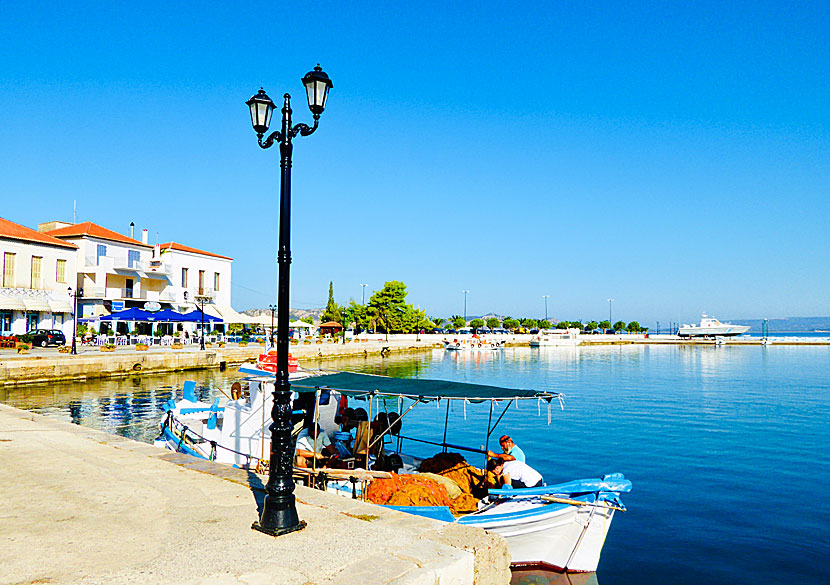
There are two ports in Pylos, the large marina that you can see in the picture above, and the fishing port that starts where the square ends. The fishing port is home to fishing boats and excursion boats. To the right of the fishing port are the two beaches and several cozy tavernas and bars. If you like fresh fish and seafood, you can check out the catch of the day in the port before ordering it for dinner tonight.
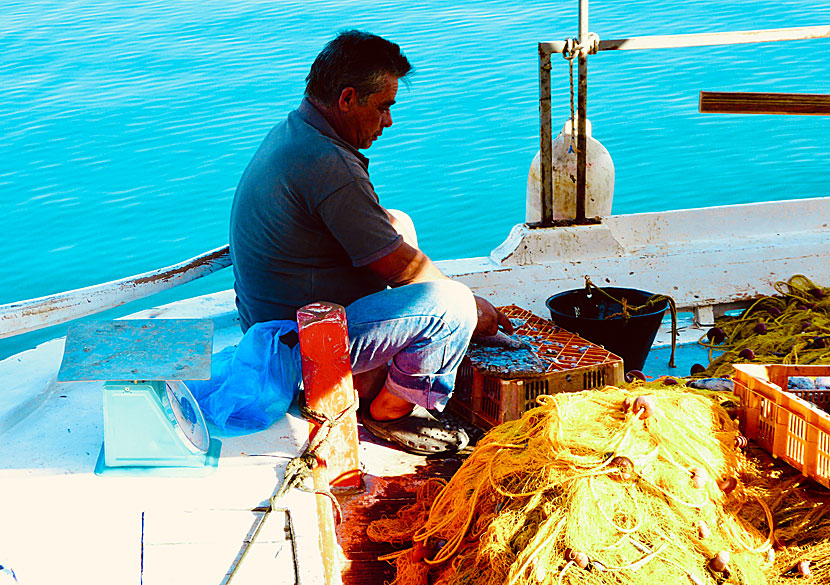
Fishing boats in Pylos port.
If you like fresh fish and seafood, you've come to the right place.
Cozy bars near the beaches in Pylos. |
|
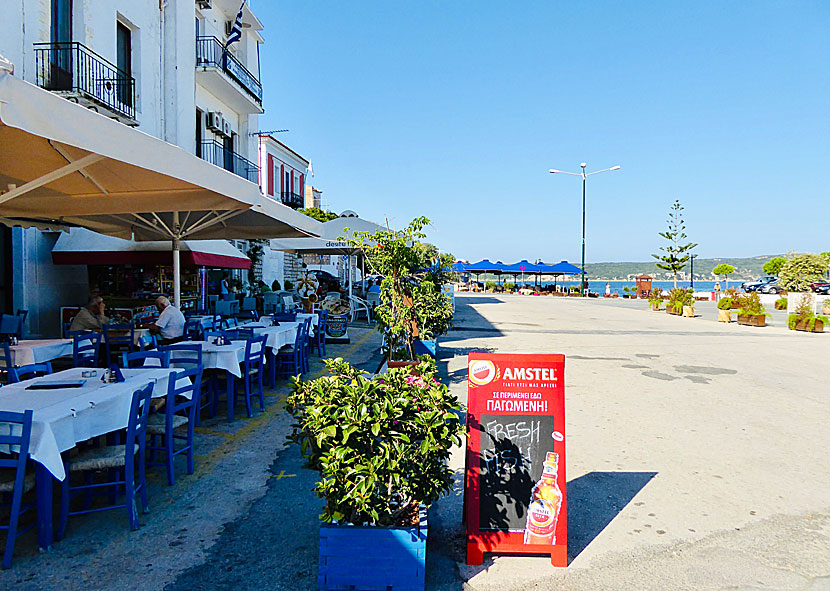
Choosing a taverna is not easy. All the ones I have eaten at have been good so I can't recommend any in particular. When I have chosen where to eat I have gone with my mood, sometimes I want to sit by the sea and just relax, sometimes I want a bit more activity and choose to eat in or near the square. No matter where you choose to eat, I can (almost) guarantee that you will be satisfied.
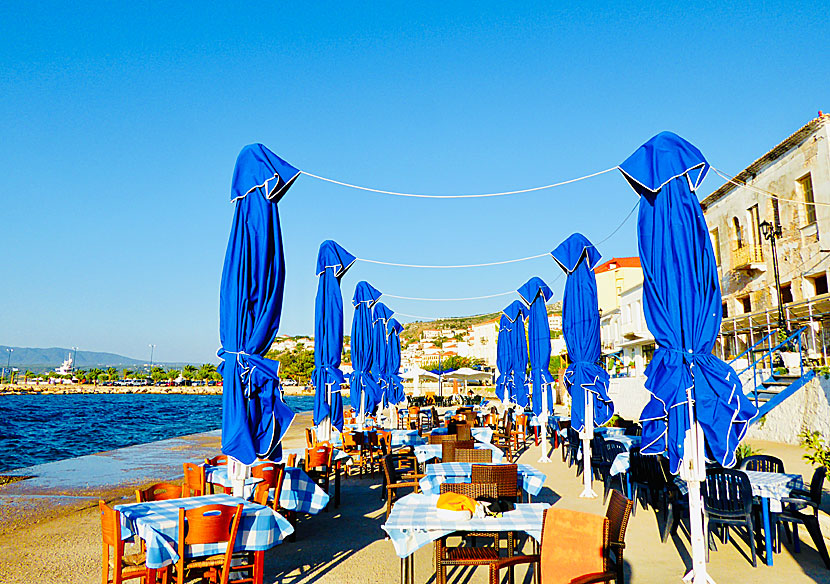
Restaurants and tavernas along the harbor promenade in Pylos.
Taverna overlooking the harbor promenade.
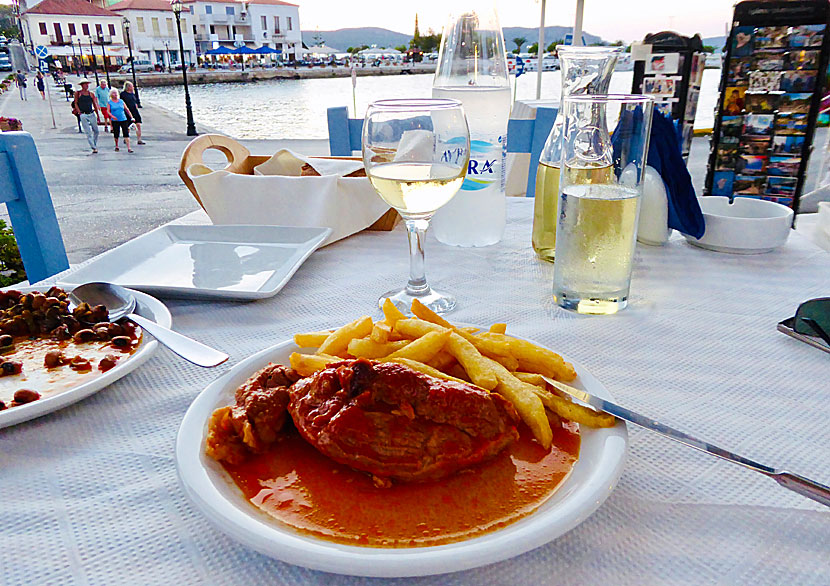
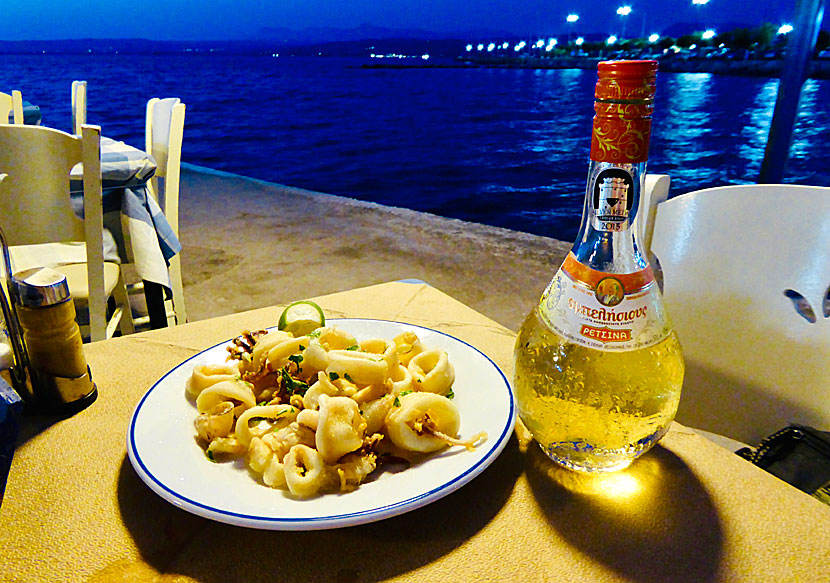
Fresh calamari and cold retsina at a restaurant by the bathing jetty.
One of the restaurants on the bathing jetty to the right of the harbor promenade. |
|
Most people who travel to Pylos spend their days elsewhere. As I mentioned above, there is plenty to see and do in the area. But if you want to take it easy for a day, there is also plenty to see and do in Pylos. I highly recommend a boat trip in Navarino Bay, and a visit to Niokastro and the impressive aqueduct is a must, at least if you like old fortresses and are interested in Greek history.
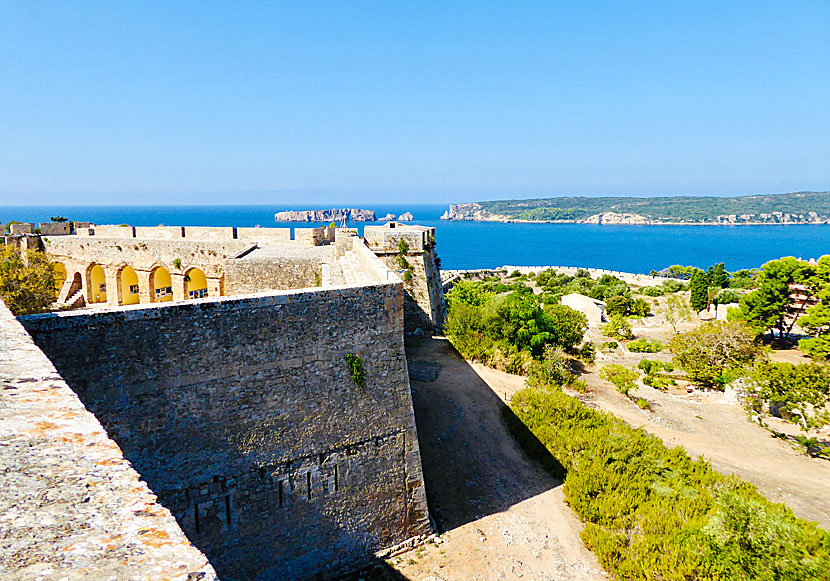
Part of inner Niokastro on the left and part of outer Niokastro on the right.
Niokastro is said to be one of the best preserved fortresses in all of Greece. I will leave that to the imagination. However, there is no doubt that it is well preserved, nor that the fortress is large, not to say gigantic. Niokastro was built in 1573 by the Ottomans. The purpose was to control the entrance to the Bay of Navarino, one of the best natural harbors in the Mediterranean. The fortress was given thick walls, bastions and a well-protected harbor below. It became an important pawn in the power game between the Ottomans and Venetians, and later also the French and Greeks during the Battle of Navarino.
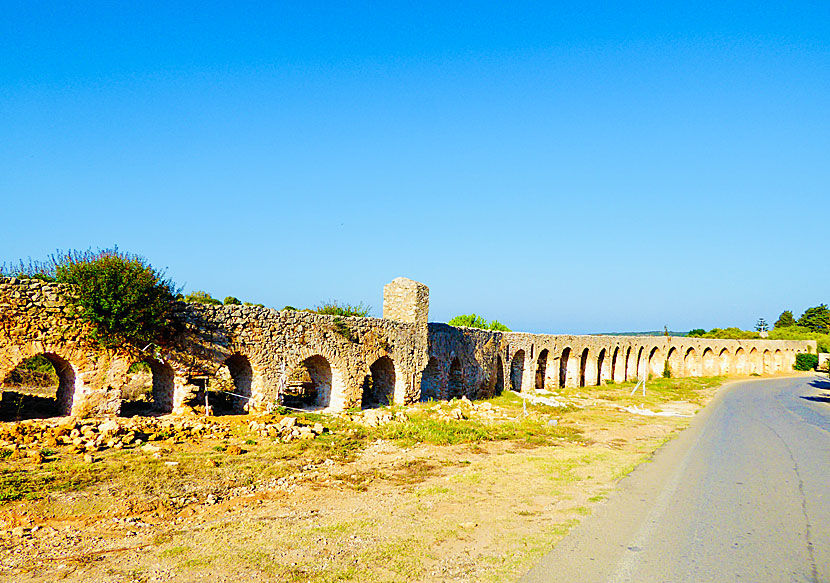
The aqueduct supplied water to Niokastro and was used to supply water to Pylos until 1907.
Read more about Niokastro and the aqueduct in Pylos here »
If you are interested in the Olympics in general and athletics in particular, there is a small museum in Pylos that is worth a visit. It may be interesting even for those of you who are not interested in sports. Greece participated with 23 participants at the 1912 Summer Olympics in Stockholm. In total, they won two medals and finished in fifteenth place in the medal table. The medals were won by Konstantinos "Kostas" Tsiklitiras who was born in Pylos on October 30, 1888. He won Olympic gold in the standing long jump and Olympic bronze in the standing high jump. In the 1908 Olympics in London he won Olympic silver in the standing long jump and also Olympic silver in the standing high jump. He was good at jumping.
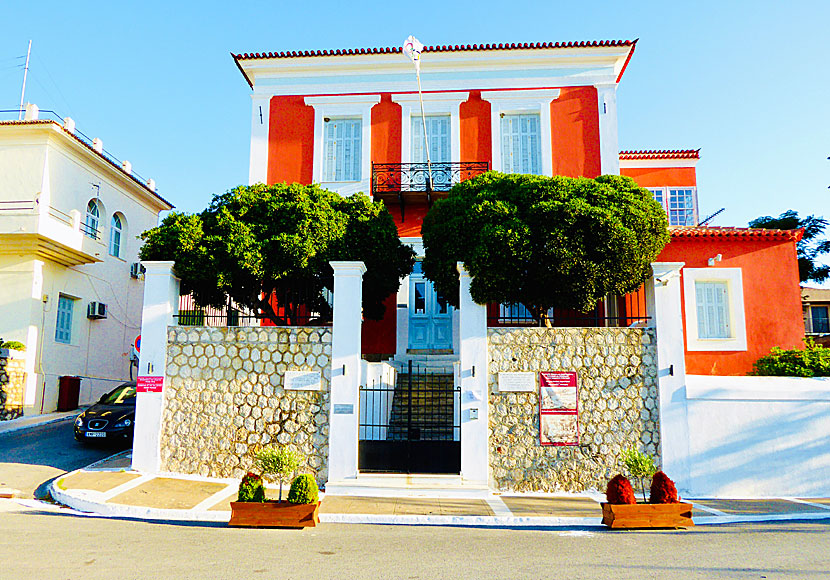
Kostas Tsiklitira's childhood home is now a museum.
Tsiklitiras was born in Pylos and later moved to Athens to study at a business school. It was here that Tsiklitiras began his sports career. He played football and water soccer for Panathinaikos, but is best known for his four Olympic medals. He became Greek champion a total of 19 times. He later suffered from meningitis and died on February 10, 1913 at the age of 24.
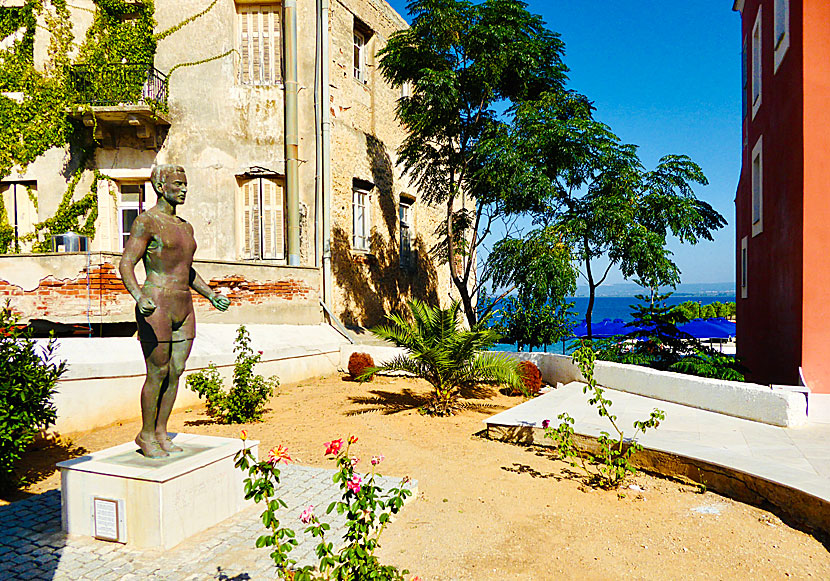
Bronze statue of a jumping Kostas Tsiklitiras outside the museum.
His childhood home can be visited in Pylos. It is now a museum that displays Tsiklitiras' sporting achievements. In front of the museum you can see a bronze statue of Tsiklitiras. In the same house is the René Puaux Museum, which contains collections of the Frenchman René Puaux, which include historical documents, maps and objects related to the region and the Battle of Navarino.
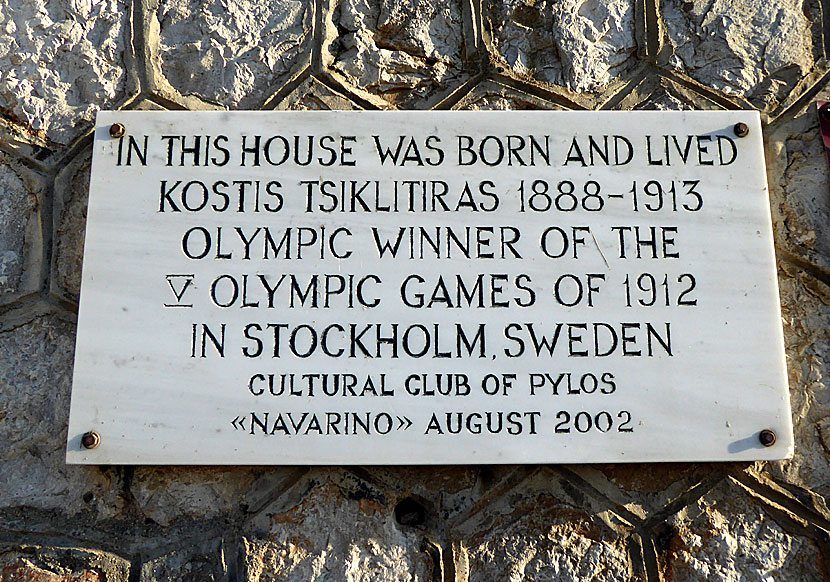
Commemorative plaque that sits outside the museum.
A little curiosity is that Pylos football team Tsiklitiras Pylos F.C. has taken its name after Kostas Tsiklitiras. That says a lot about how big he was - and is - in Pylos. Tsiklitiras' father - Iraklis Tsiklitiras - was mayor of Pylos between 1879 and 1895. He was the one who planted one of the large plane trees in the square in Pylos. |
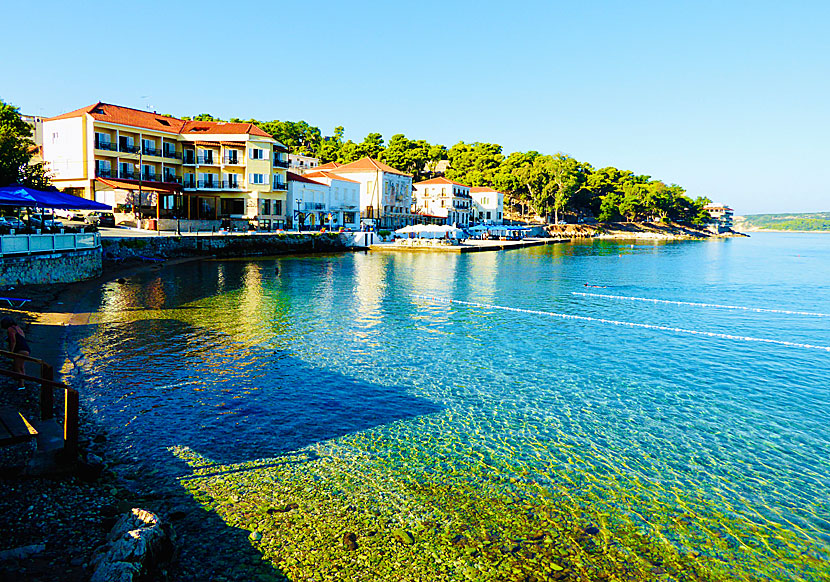
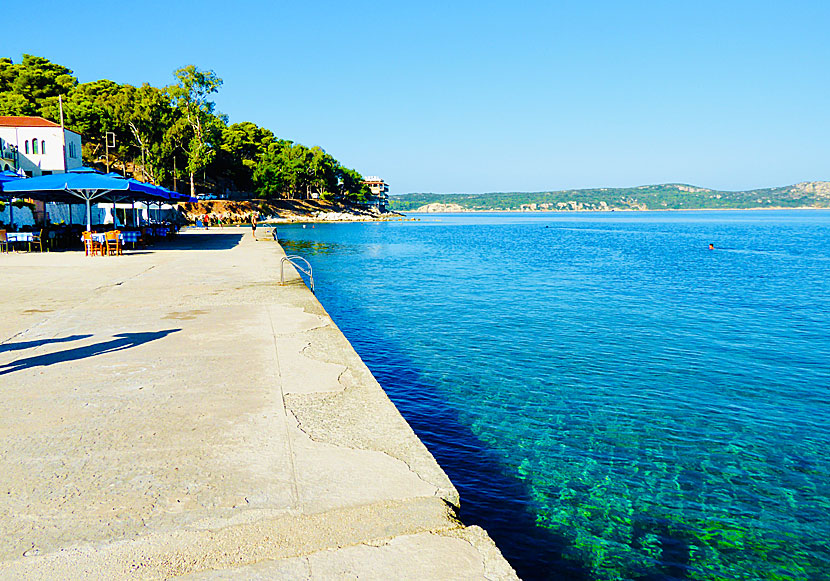
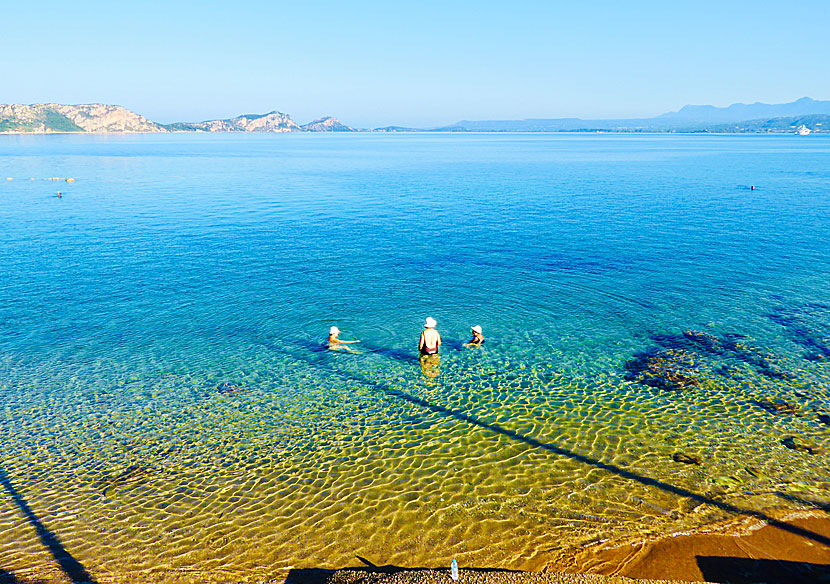
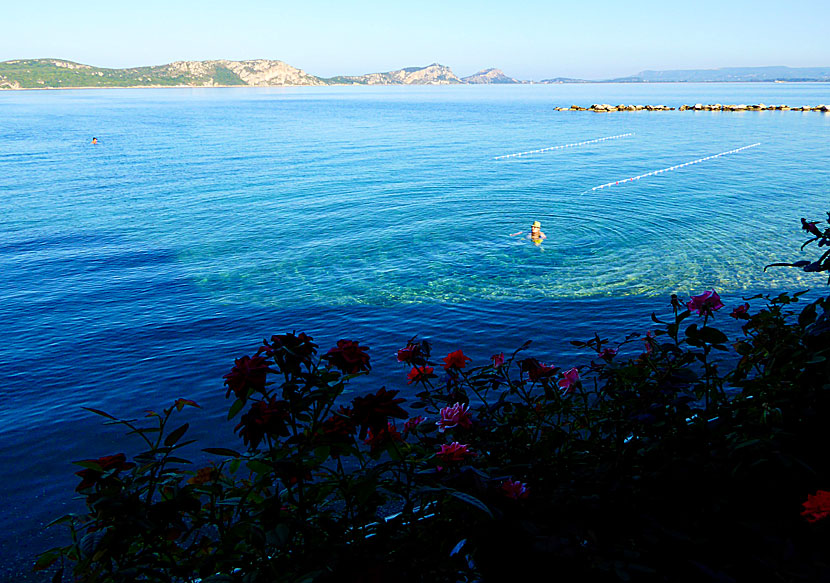
BEACHES IN PYLOSNo one travels to Pylos for the beaches. Unlike almost all popular tourist destinations in Greece, there is no beach here that attracts. So if you are looking for long, fine sandy beaches, Pylos is not for you. But is there a small beach anyway? Oh yes! The beach in Pylos fits the epithet “small but damn good”. Actually, there are two beaches separated by a large bathing jetty with bathing ladders. I like both beaches, partly because the water is absolutely fantastic, partly because you can jump or dive straight into the sea and partly because it is crawling distance to several good tavernas.
One of the beaches in Pylos in one direction.
The same beach in Pylos in the other direction.
The bathing jetty that separates the two beaches.
The smallest of the beaches in Pylos.
The beaches may be small, but the water is absolutely fantastic.
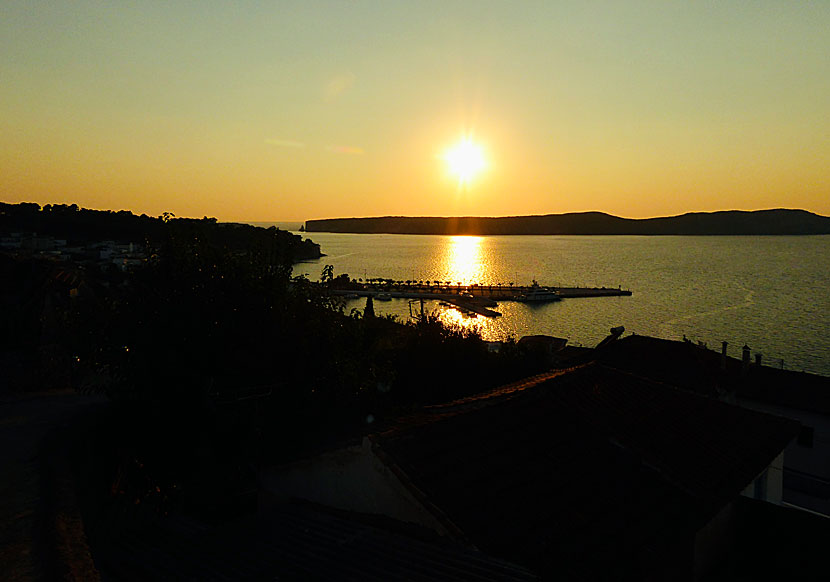
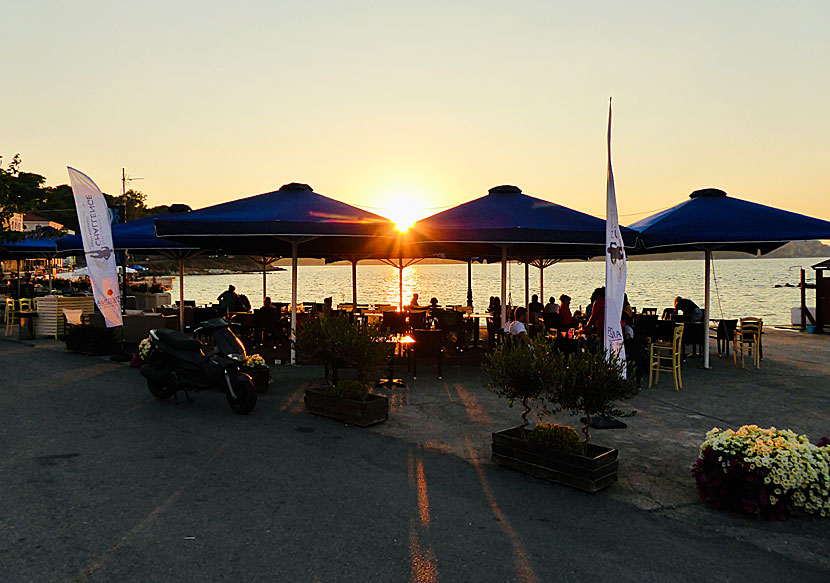
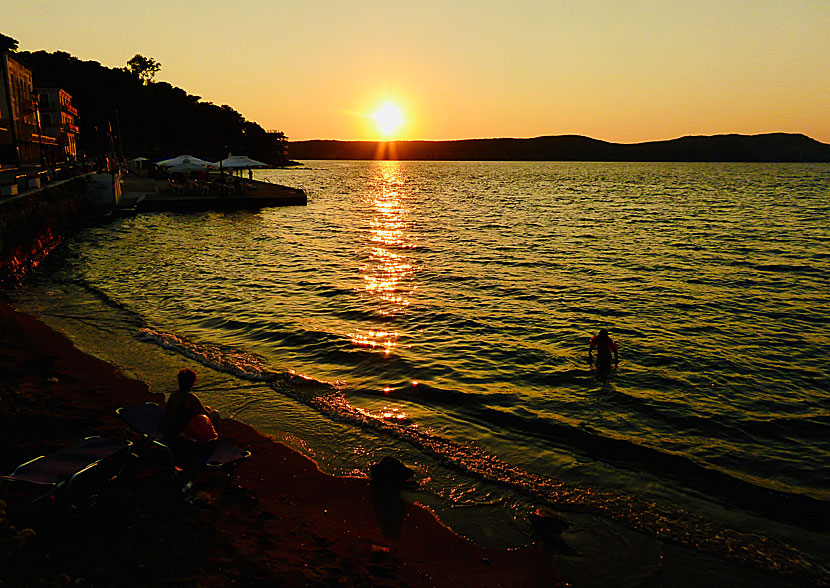
The beautiful sunset in Pylos. |
|
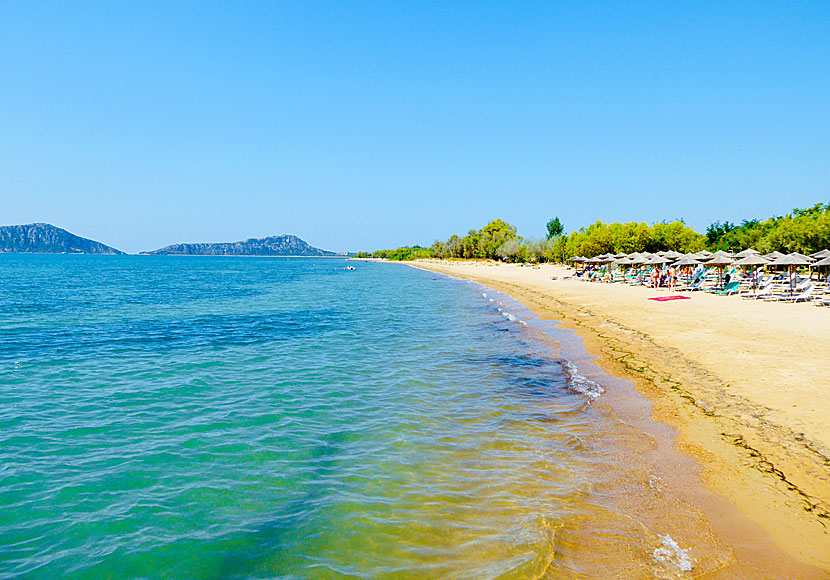
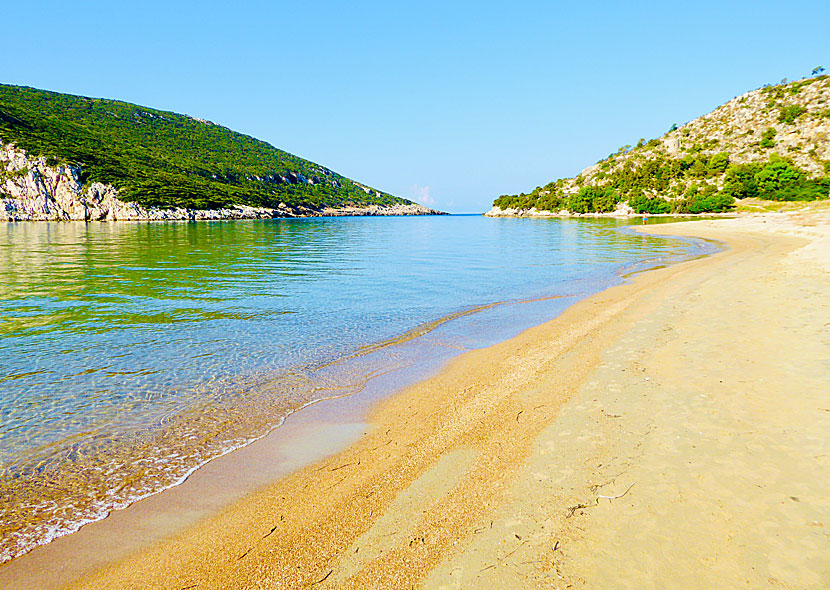
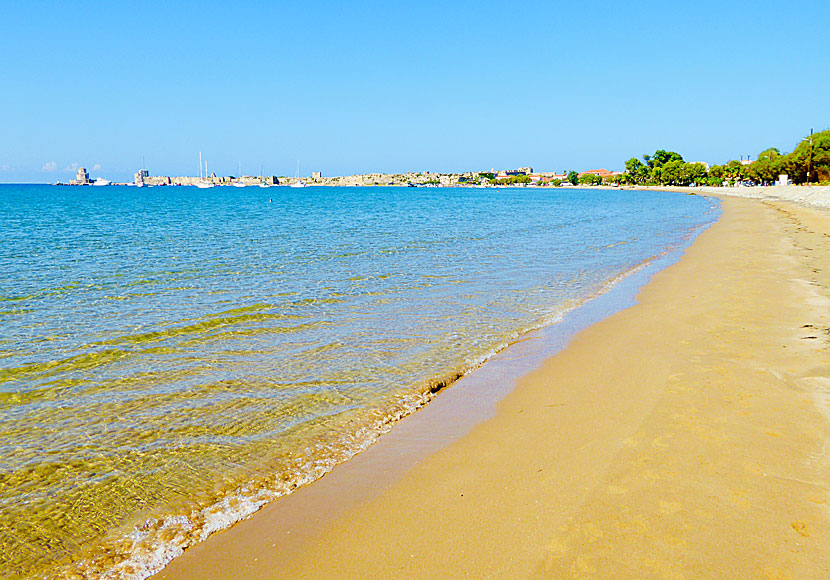
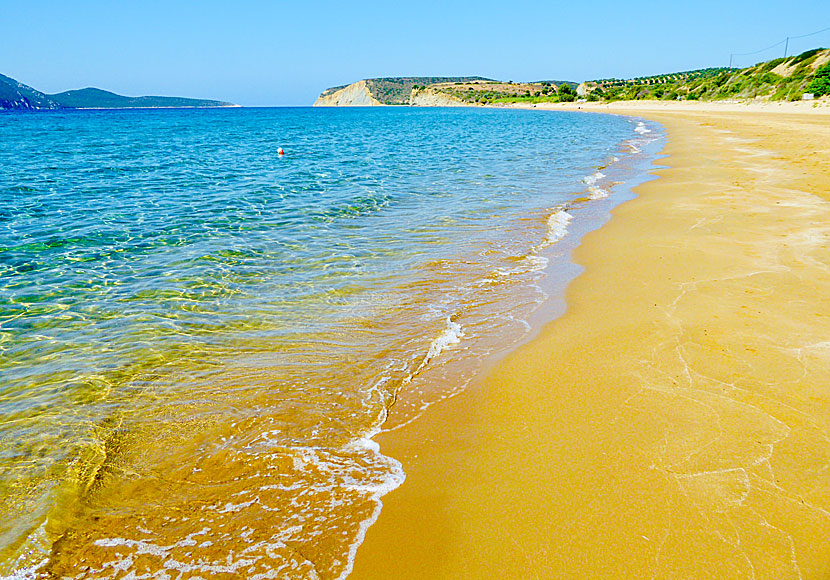
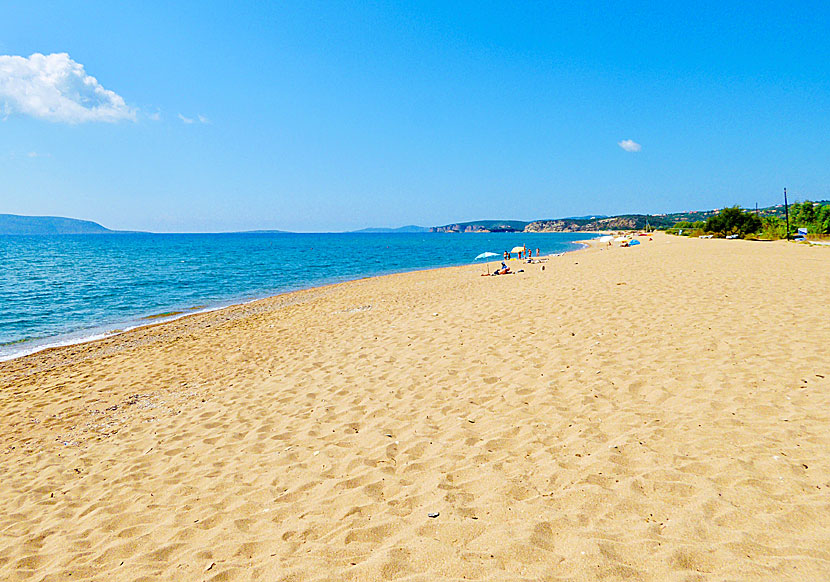
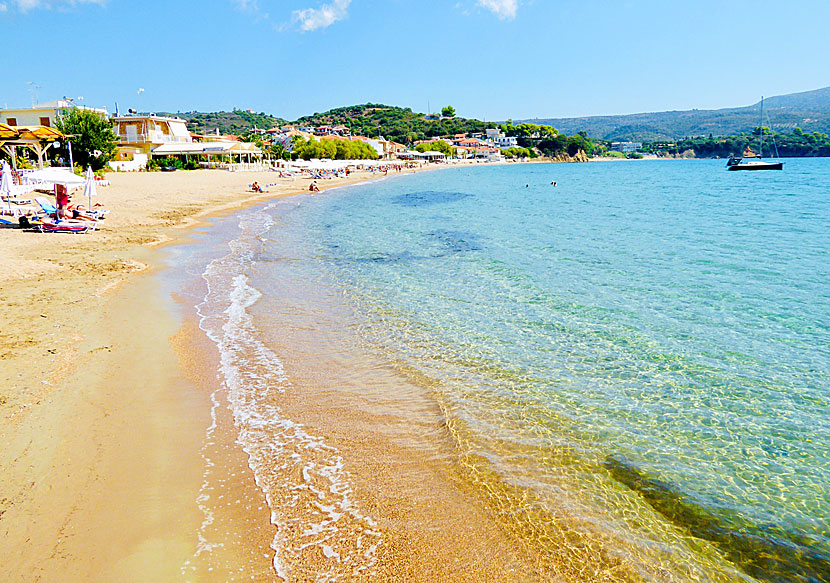
If you think the beaches above are a bit small, don't despair, there are many very nice sandy beaches near Pylos. Examples of such beaches are Finikounda, Mavrovouni, Gialova, Lampes, Methoni, Divari, Romanos and Voidokilia. The beach that is furthest from Pylos is Finikounda, which is 22 kilometers away, all the other beaches I mentioned above are closer. Below are pictures of nice beaches that are close to Pylos.
Gialova beach is located about 6 kilometers north of Pylos.
Divari beach is located about 11 kilometers north of Pylos.
Voidokilia beach is located about 17 kilometers north of Pylos.
Methoni beach is located about 12 kilometers south of Pylos.
Lampes beach is located about 15 kilometers south of Pylos.
Mavrovouni beach is located about 20 kilometers south of Pylos.
Finikounda beach is located about 22 kilometers south of Pylos. |
HOTELS IN PYLOSThe range of hotels is surprisingly good and the choices are wide. There is everything from flashy boutique hotels to simple family-run guesthouses. My favorite hotel is, as you know if you have read this entire page, Hotel Anezina. But there are other very good hotels, and some are listed as suggestions below.
Book Hotel Anezina here »Book Karalis Beach here »Book 12 Gods Resort here »Book Hotel Philip here »Book other hotels in Pylos here »
Read more about Peloponnese here » |
HOME |
ABOUT US |
SEARCH |
BOOK HOTEL |
GREEK ISLANDS |
SWEDISH
|
|
© 2007-2026 | Janne Eklund | Kalispera and Kalimera. |